
Medicine
Herbal Remedies for Cold and Flu Symptoms at Home: What Actually Works

By Ephraim Rusk · · 10 min read
This article contains an affiliate link. If you buy through it, we may earn a commission at no extra cost to you.
Quick answer
Several herbal remedies — including honey for sore throat, ginger for nausea and congestion, and elderberry extract for flu duration — have credible clinical or traditional-use evidence supporting their use for mild cold and flu symptoms. None replace antiviral medication for serious illness, but they are practical, low-cost options when conventional options are unavailable or unnecessary.
Herbal remedies for cold and flu symptoms at home are not a fringe idea — they are what most of the world still relies on for minor respiratory illness, and a growing body of research backs several of them up. When you are three hours from the nearest urgent care, the roads are iced over, or you simply do not want to drag a sick child out in January, knowing which plant-based options are worth reaching for matters.
This is not a pitch for abandoning conventional medicine. Antivirals, antibiotics when warranted, and emergency care are irreplaceable. But the common cold and uncomplicated seasonal flu sit firmly in the category of ailments most healthy adults manage at home regardless — and managing them with something that actually helps, rather than a cabinet full of combination cold medicines that mostly just mask symptoms, is a smarter play.
What follows covers the remedies with the strongest evidence, the ones that are mostly folklore, and the signs that tell you it is time to stop managing symptoms and get professional care.
Why Home Remedy Knowledge Matters for Preparedness
Cold and flu are the most common reasons people visit a doctor in the United States — and the vast majority of those visits result in nothing more than a recommendation to rest, stay hydrated, and manage symptoms. That is not a knock on physicians; it reflects the reality that most respiratory viral illness resolves on its own in seven to ten days regardless of treatment.
The problem in a preparedness context is that those symptom-management options disappear quickly. Over-the-counter cold and flu medications were among the first products to disappear from shelves during supply disruptions in 2020 and 2021. A well-stocked natural medicine cabinet — built from shelf-stable herbs, raw honey, and a few dried botanicals — does not have that vulnerability.
Beyond supply chain concerns, there is a practical cost argument. The average American household spends roughly $300 to $400 per year on over-the-counter medicines, a significant portion of which goes toward cold and flu products. Many of those products combine active ingredients you may not need with inert fillers and flavoring agents. Learning which single-ingredient herbal preparations do what job lets you build a more targeted, cheaper kit.
None of this requires a background in herbalism. The remedies covered below use ingredients that grow in most kitchen gardens, are available dried at any grocery store, or can be ordered in bulk and stored for years.
Herbal and Kitchen Remedies With Real Evidence Behind Them
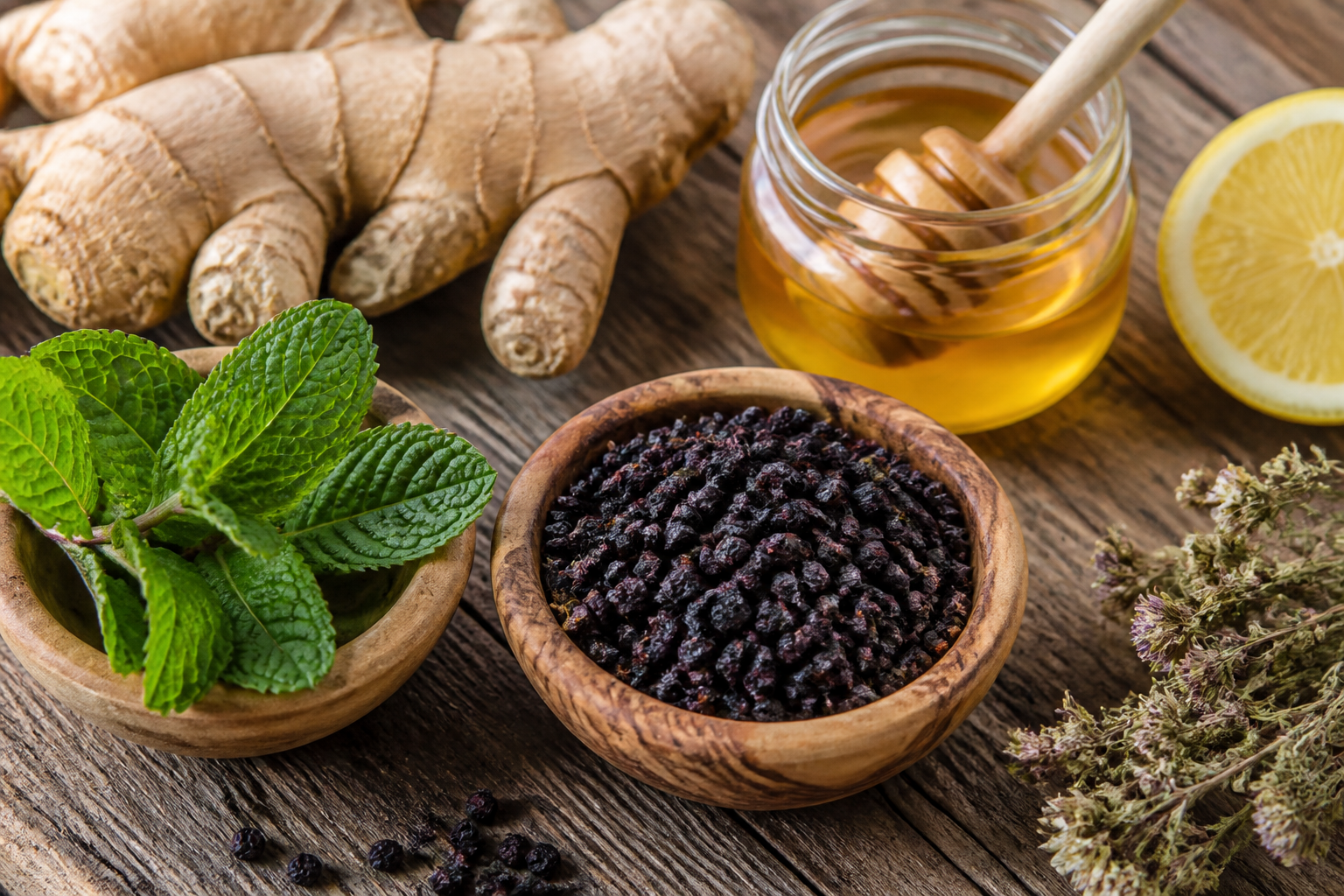
Honey is the single best-supported home remedy for sore throat and nighttime cough. A 2021 systematic review published in BMJ Evidence-Based Medicine found that honey outperformed usual care — including over-the-counter antihistamines and cough suppressants — for upper respiratory tract symptoms in adults and children. Raw honey has additional antimicrobial properties; one to two tablespoons in warm water or tea is the standard preparation. Note that honey should never be given to children under 12 months due to botulism risk.
Ginger root has documented anti-inflammatory and antiemetic (anti-nausea) properties. Fresh or dried ginger in hot water — a simple ginger tea — helps with the nausea and body aches that accompany flu, and preliminary evidence suggests it may have modest antiviral activity, though that claim is still being investigated and should not be taken as established fact. Ginger is safe for most adults at culinary doses.
Elderberry (Sambucus nigra) extract is probably the most discussed herbal cold-and-flu product on the market. A 2016 randomized controlled trial published in Nutrients found elderberry supplementation reduced cold duration and severity in air travelers. A 2019 meta-analysis in Complementary Therapies in Medicine found elderberry substantially reduced upper respiratory symptoms. The mechanism appears related to flavonoid compounds that may inhibit viral entry into cells. Commercial syrups and lozenges are widely available, or you can make elderberry syrup at home from dried berries — but raw or undercooked elderberries are toxic and must be properly prepared.
Peppermint and eucalyptus, used as steam inhalation, provide temporary but real relief from nasal congestion. A few drops of peppermint oil or a handful of fresh eucalyptus leaves in a bowl of steaming water, with a towel over your head to trap the steam, loosens mucus and clears airways. This is one of the oldest documented cold remedies in the world — not magic, but mechanically effective.
Garlic contains allicin, a compound with in-vitro antimicrobial and antiviral activity. Human trial evidence is limited, but a 2020 Cochrane review noted insufficient high-quality trials to draw strong conclusions, while acknowledging garlic's historical use and plausible mechanism. It is a low-cost, low-risk addition to soups and broths during illness. Eating it raw maximizes allicin content; heat degrades it significantly.
What Is Mostly Folklore (And Why You Should Know the Difference)
Echinacea is the most popular herbal cold remedy in the United States, and the evidence is genuinely mixed. Multiple systematic reviews have found small, inconsistent benefits for reducing cold duration, and a 2015 Cochrane review concluded there may be a modest preventive effect — but the variation between study designs, echinacea species, and preparations makes it hard to draw clean conclusions. It is unlikely to hurt, but it should not be your primary strategy.
Vitamin C megadosing — popularized since Linus Pauling's 1970 book — does not prevent colds in the general population according to repeated Cochrane analyses. It may modestly shorten duration if taken consistently before illness, but taking it only after symptoms start shows minimal effect. Maintaining adequate vitamin C intake through food is sensible; chasing it with gram-level doses once you are sick is not well-supported.
Colloidal silver is frequently marketed in prepper and natural health communities as a broad-spectrum antimicrobial remedy for colds and flu. The FDA has explicitly stated there is no evidence colloidal silver is safe or effective for treating any disease or condition, and chronic ingestion carries the risk of argyria, a permanent bluish-gray skin discoloration. It does not belong in a home remedy kit.
The distinction matters because a well-stocked herbal medicine shelf has limited space and limited budget. Knowing which preparations earn their place keeps you from spending money and shelf space on products that will not deliver when it counts.
Safe Home Management of Fever and Body Aches Without Pharmaceuticals
Fever is a natural immune response, not an enemy — in adults, low-grade fever (below 103 degrees Fahrenheit) generally does not require aggressive suppression. The goal is comfort and hydration, not driving the temperature to zero at all costs.
Cool, damp cloths applied to the forehead, neck, and wrists draw heat effectively through evaporation. Lukewarm baths — not cold, which can cause shivering that raises core temperature — are a traditional and evidence-consistent approach. The CDC recommends staying hydrated above all else, as dehydration dramatically worsens flu outcomes.
Willow bark (Salix species) contains salicin, the compound from which aspirin was originally synthesized. Willow bark tea has a centuries-long documented use for fever and pain. It is milder than pharmaceutical aspirin and slower-acting, but for a preparedness context where conventional pain relievers are unavailable, it is a legitimate option. Do not give willow bark to children or adolescents — the same Reye's syndrome concern that applies to aspirin applies here. Do not use it if you are allergic to aspirin.
Bone broth and clear soups remain one of the best-supported generic sick-day interventions. A study from the University of Nebraska found chicken soup had genuine anti-inflammatory effects on neutrophil migration in vitro — backing up, in part, the mechanistic basis for a very old remedy. It also provides electrolytes and easy calories when appetite is suppressed.
Watch for warning signs that home management has reached its limit: fever over 103 degrees Fahrenheit persisting more than three days, difficulty breathing, chest pain, confusion or severe lethargy, or any symptoms in an infant under three months. These require professional evaluation regardless of circumstances.
- Fever below 103 F in a healthy adult: manage with fluids, rest, and cool cloths
- Fever above 103 F, or any fever lasting more than three days: seek evaluation
- Difficulty breathing or chest pain: stop home treatment, escalate immediately
- Confusion, severe lethargy, or inability to keep fluids down: escalate
- Any fever in an infant under three months: emergency evaluation, not home management
Our Recommendation: Herbal Remedies for Everyday Ailments
A cold that hits at the wrong time — a grid-down winter weekend, a supply-disrupted stretch, or simply a household with an empty medicine cabinet — becomes a real problem if you have no system for managing it. Knowing that elderberry, honey, ginger, and willow bark exist is a start, but knowing how to prepare them correctly, in what amounts, and for which specific symptoms is where most people fall short.
The gap in DIY research is not information — it is organization and reliability. Pulling individual preparation instructions from scattered blog posts and forum threads during a sick week, when you or someone you care for is miserable, is a friction point that causes people to either give up or make preparation errors. Elderberry syrup made from improperly processed berries, for example, causes nausea and vomiting — which is the last thing you need.
Herbal Remedies for Everyday Ailments is a $12 ebook covering 100 herbal remedy recipes for common ailments using household and garden ingredients — built as a practical complement to conventional medicine for the minor issues that make up the bulk of a family's health management. At that price point, it costs less than a single box of name-brand cold medicine, and it comes with a 60-day money-back guarantee if it does not deliver what you need. If you want a single organized reference that covers preparation methods, not just ingredient lists, it is worth having on your shelf before you need it. For the next step, read Treating Wounds Without a Doctor: Home Remedies That Actually Work (and What to Avoid).
Our recommendation
Herbal Remedies for Everyday Ailments
Check availability →This article contains an affiliate link. If you buy through it, we may earn a commission at no extra cost to you.
Frequently asked questions
What is the most effective herbal remedy for cold and flu symptoms?
Honey has the strongest clinical evidence for sore throat and cough relief among home remedies. Elderberry extract has credible evidence for reducing flu duration and severity. For congestion, steam inhalation with peppermint or eucalyptus provides real, if temporary, relief. No single herbal remedy replaces rest and hydration as the foundation of recovery.
Does elderberry actually work for the flu?
Published meta-analyses, including a 2019 review in Complementary Therapies in Medicine, found elderberry supplements substantially reduced upper respiratory symptoms and duration. The evidence is encouraging but not conclusive, and elderberry is not a substitute for antiviral medication in high-risk individuals. Raw elderberries must be cooked before use — they are toxic unprocessed.
Can you manage flu symptoms at home without any medication?
For healthy adults with uncomplicated flu, home management with rest, fluids, broth, honey for cough, and cool cloths for fever is consistent with standard medical guidance. Seek care if fever exceeds 103 F for more than three days, breathing becomes difficult, or symptoms worsen rather than improve after five to seven days.
Is it safe to use willow bark instead of aspirin for fever?
Willow bark contains salicin, a natural precursor to aspirin, and has a documented history of use for fever and pain. It is generally considered safe for adults at moderate doses, but should not be given to children or adolescents due to Reye's syndrome risk, and should be avoided by anyone with an aspirin allergy or on blood-thinning medication.
What herbal remedies are safe for children with cold symptoms?
Honey (one to two teaspoons in warm water or tea) is safe for children over 12 months and has evidence for reducing cough severity. Steam inhalation with plain water is safe for older children with supervision. Avoid willow bark, echinacea in young children, and any supplement not specifically formulated and dosed for pediatric use. Always consult a pediatrician before giving herbal preparations to children under two.
Related guides
Sources
- NIH National Center for Complementary and Integrative Health — Elderberry
- NIH NCCIH — Echinacea for Cold and Flu
- CDC — Flu Symptoms and Complications
- NIH NCCIH — Ginger for Health
General preparedness information, not medical or legal advice. Follow instructions from your local emergency authority during an active event.
Field notes by email
Get the next guide before you need it
One email when a new field guide drops — water, food, power, medicine. No spam, no daily noise, unsubscribe in one click.
Comments on this guide
Questions, corrections and field reports from your own setup are welcome.
No comments yet. Be the first to add a field report.