
Medicine
Managing Chronic Medications When the Supply Chain Breaks Down

By Ephraim Rusk · · 11 min read
This article contains an affiliate link. If you buy through it, we may earn a commission at no extra cost to you.
Quick answer
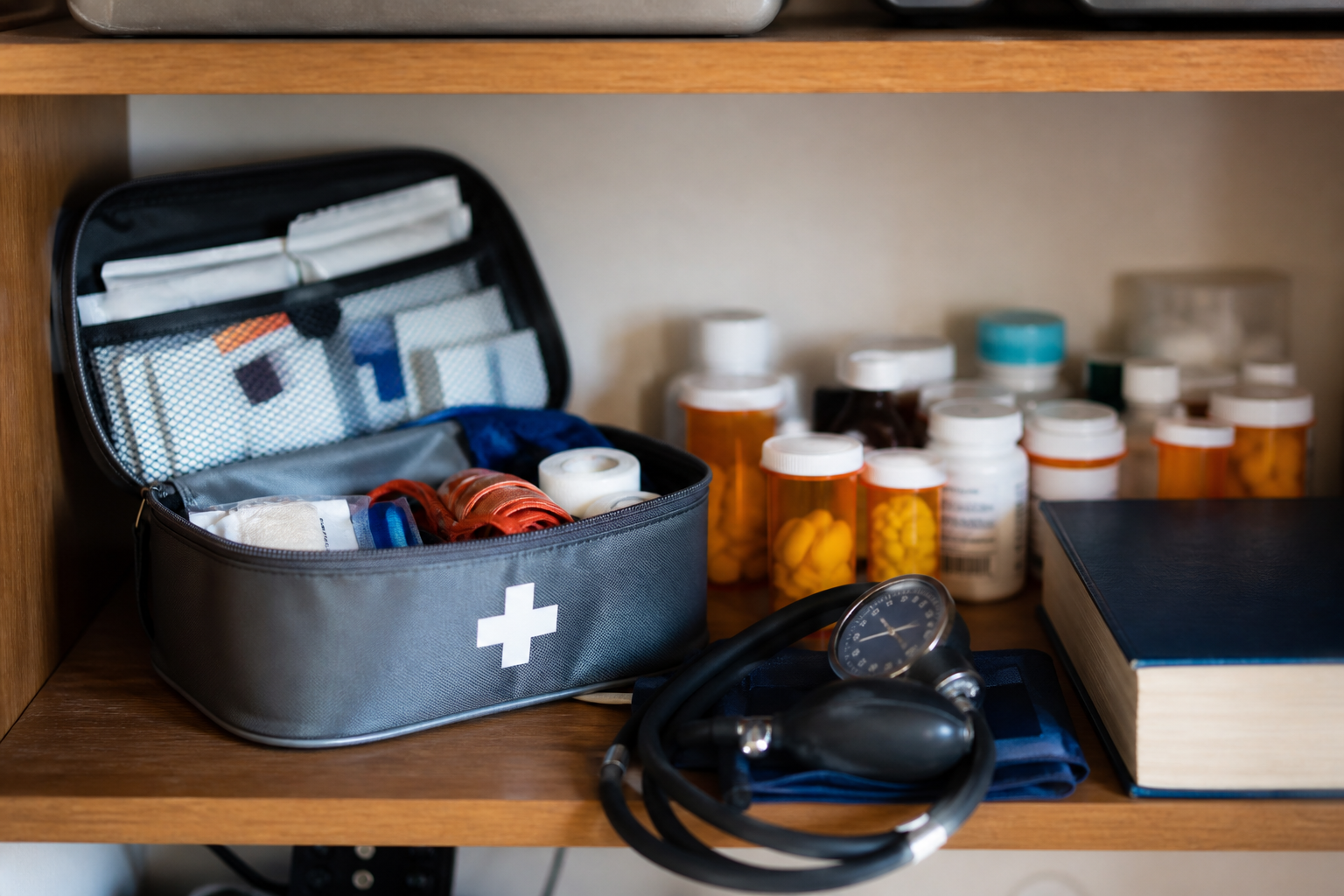
If your chronic medication supply is disrupted, your first priority is rationing intelligently under medical guidance while pursuing every legal refill avenue available — emergency supplies, pill-splitting where appropriate, and therapeutic alternatives your doctor has pre-authorized. Planning this before a disaster happens is the only reliable strategy.
About 131 million Americans take at least one prescription medication every day. For tens of millions of them — people managing Type 2 diabetes, hypertension, epilepsy, hypothyroidism, heart failure, or mental health conditions — missing a week of medication is not an inconvenience. It is a medical emergency.
Most preparedness planning focuses on food, water, and power. Medication rarely gets the same attention, and that is a serious gap. During Hurricane Maria in 2017, Puerto Rico's pharmaceutical manufacturing infrastructure — which at the time produced roughly 10 percent of all drugs consumed in the United States — was crippled for months. During COVID-19, generic drug shortages affected over 300 medications simultaneously. Supply chain fragility is not a hypothetical; it is a documented, recurring pattern.
This article walks through the realistic problem of chronic medication access during an emergency, what you can legally and practically do before a crisis hits, how to extend and prioritize a limited supply, and what medical resources belong in every prepared household.
Why Medication Supply Chains Are More Fragile Than You Think
The United States produces a shrinking share of its own pharmaceutical ingredients. The FDA has documented that a significant portion of active pharmaceutical ingredients — the chemical compounds that make drugs work — are manufactured in India and China. When a single factory faces regulatory shutdown, a natural disaster, or a geopolitical disruption, the ripple effects reach American pharmacy shelves within weeks.
Generic drugs, which account for roughly 90 percent of all prescriptions dispensed in the U.S., are especially vulnerable. Because profit margins are thin, manufacturers operate with minimal inventory buffers. There is little financial incentive to hold a six-month safety stock. The FDA maintains a Drug Shortage Database that, at any given time, lists dozens of active shortages — and that list only captures what manufacturers are required to report.
For the household prepper, the lesson is straightforward: the system is not designed to absorb shocks gracefully, and individuals who depend on it without a backup plan are one bad quarter away from a serious personal health crisis.
Building a Legal Medication Reserve Before Any Emergency
The single most effective thing you can do is build a buffer supply before you ever need it. Many people do not realize this is often possible through entirely routine channels.
Talk to your prescribing physician. Explain that you are trying to maintain a 30- to 90-day emergency supply and ask whether they can write your prescription with that buffer built in. Many doctors are receptive — especially for stable, long-term conditions — and can write for a 90-day supply rather than a 30-day one. Some will note in your file that you are maintaining an emergency reserve.
Check your insurance plan's mail-order pharmacy option. Most major insurers and Medicare Part D plans offer 90-day mail-order supplies at lower copays than monthly retail fills. This alone can give you a rolling buffer if you refill as soon as you are eligible rather than waiting until you run out.
If you travel internationally, note that many countries sell common medications over the counter that require a prescription in the U.S. This is not a recommendation to bypass your physician — your dosage and formulation matter — but it is a real option some preppers use for backup supply when traveling.
Store medications correctly. Heat, humidity, and light degrade drugs faster than most people expect. A cool, dark, dry location — not the bathroom medicine cabinet, which is warm and humid — extends shelf life. The FDA notes that many medications remain potent beyond their labeled expiration date when stored properly, though this varies significantly by drug class and should be discussed with a pharmacist.
- Ask your doctor for a 90-day supply prescription for stable chronic conditions
- Use mail-order pharmacy programs to accumulate a rolling buffer
- Store medications in a cool, dark, dry location — not the bathroom
- Keep a written medication list with dosages, prescribing physician, and indication
- Ask your pharmacist specifically about your drug's stability and real-world shelf life
- Confirm whether your insurer has emergency fill provisions for declared disasters
Intelligent Rationing: What to Do When Supply Runs Short
If you find yourself with a dwindling supply and no immediate refill option, rationing intelligently is far safer than stopping abruptly — but it must be done carefully and ideally with medical guidance, even if that guidance comes via telehealth.
Never abruptly stop medications for seizure disorders, severe mental illness, beta-blockers for heart conditions, or corticosteroids. Abrupt discontinuation of these drug classes carries real risk of serious withdrawal effects, rebound events, or medical crisis. For these specifically, contact a physician via any available channel — telehealth, a nurse hotline, a local urgent care — before adjusting dose.
For some medications, dose reduction is a reasonable short-term strategy under supervision. A person taking a stable, well-controlled blood pressure medication at a standard dose may tolerate a temporary 20 to 25 percent reduction while monitoring their blood pressure at home — but this requires a cuff and a baseline reading to evaluate against. Guessing is not a plan.
Prioritize medications by consequence of missing them. Insulin for Type 1 diabetes is non-negotiable. Antihypertensives for someone with a history of stroke carry more short-term risk than, say, a cholesterol-lowering statin, where a brief gap has minimal immediate consequence. Triage your supply to the highest-consequence drugs first.
Document everything. If you are rationing or substituting, keep a written log of what you took, when, and any symptoms you noticed. This record is invaluable for the physician who eventually re-evaluates you.
Emergency Refill Rights and Disaster Provisions
Most people do not know that many states have emergency dispensing laws that allow pharmacists to provide a limited supply of certain chronic-condition medications during a declared disaster — without a new prescription. The specifics vary by state, but it is worth knowing your state's rules before an emergency, not during one.
FEMA and state emergency management agencies often coordinate with pharmacy networks to establish emergency dispensing points during major disasters. During a federally declared disaster, Medicare and many Medicaid programs automatically waive early refill restrictions. Keep your insurance card, prescriber contact information, and a written medication list in your go-bag so you can access these systems even if you evacuate.
The National Alliance on Mental Illness and several chronic disease advocacy organizations maintain crisis hotlines that can help connect patients to medication assistance programs during emergencies. Pharmaceutical manufacturers also operate patient assistance programs that can bridge gaps for uninsured or underinsured patients.
If you are traveling or displaced, GoodRx and similar discount programs can sometimes fill prescriptions at reduced cost at pharmacies that accept them, even out of state, for medications that do not require special authorization.
- Research your state's emergency dispensing law before any disaster occurs
- Keep insurance cards and a written medication list in your go-bag
- Know that Medicare and many Medicaid plans waive early refill restrictions during federal disaster declarations
- Contact your drug manufacturer's patient assistance program if cost or supply is a barrier
- Use telehealth services to get medical guidance even when local care is inaccessible
Our Recommendation: The Home Doctor
Even the most thorough medication stockpile plan has limits, and the hardest scenarios are the ones where supply is gone and professional medical care is genuinely unreachable — not for an afternoon, but for days or weeks. In those situations, knowing how to recognize a hypertensive crisis versus a panic attack, how to manage a diabetic emergency without hospital equipment, or how to safely dress a wound that cannot be sutured matters enormously. That is the gap The Home Doctor is designed to fill.
Written by licensed medical professionals specifically for households that may lose reliable access to a doctor, The Home Doctor is a 304-page practical reference covering emergency recognition — heart attacks, strokes, diabetic emergencies — wound care and infection management, chronic condition monitoring, and evidence-informed natural remedies when manufactured medications are unavailable. It is not a substitute for a physician, and it does not pretend to be. What it is, is a structured, readable guide that gives non-medical adults a framework for making better decisions under pressure, written by people who understand both clinical medicine and real-world resource constraints.
If you are building out your household medical preparedness — and especially if anyone in your household manages a chronic condition — The Home Doctor belongs on the same shelf as your medication reserve. It gives you the clinical context to use what you have more intelligently, recognize when a situation is escalating beyond home management, and act competently during the window between when a problem starts and when professional help becomes available. Pick up a copy using the link below. For the next step, read Natural Remedies for Upset Stomach Without Medication: What Actually Works.
Our recommendation
The Home Doctor
Check availability →This article contains an affiliate link. If you buy through it, we may earn a commission at no extra cost to you.
Frequently asked questions
How much of a medication supply should I stockpile for emergencies?
Most emergency management guidance recommends a minimum 30-day supply for essential chronic medications, with 90 days being a more realistic buffer for serious disruptions. Talk to your prescribing doctor about building this reserve through legitimate prescription channels — many physicians will accommodate a documented emergency preparedness plan.
Can I legally get an emergency prescription refill during a disaster?
In many U.S. states, yes. State emergency dispensing laws allow pharmacists to provide a limited emergency supply of chronic-condition medications during a declared disaster without a new prescription. During a federally declared disaster, Medicare and most Medicaid programs also automatically waive early refill restrictions. Check your specific state's rules in advance.
What happens if I run out of blood pressure medication suddenly?
Do not stop abruptly without guidance. While missing a dose or two of most antihypertensive medications is unlikely to cause an immediate crisis in otherwise stable patients, rebound hypertension is a documented risk with certain drug classes — particularly beta-blockers and clonidine. Contact a telehealth provider or nurse hotline as soon as possible, monitor your blood pressure at home if you have a cuff, and avoid high-sodium foods and strenuous exertion while you work to restore supply.
Do prescription medications really expire, or is that just a label requirement?
Expiration dates are conservative estimates required by regulation, and many medications retain significant potency well beyond them when stored correctly. A landmark FDA study found that 90 percent of medications tested remained effective well past their labeled expiration date. However, some drugs — liquid formulations, certain antibiotics like tetracycline, and biologics like insulin — degrade more meaningfully over time. Always discuss your specific medications with a pharmacist before relying on expired stock.
What should I include in a written medication list for emergencies?
Your emergency medication list should include: each medication's brand and generic name, dose and frequency, the condition it treats, your prescribing physician's name and contact, your pharmacy name and phone number, your insurance ID and group number, and any known allergies or adverse reactions. Keep one copy in your go-bag, one in your car, and one stored digitally in an encrypted format you can access remotely.
Sources
- FDA Drug Shortages — Current and Resolved Shortages Database
- CDC — Emergency Preparedness for People with Chronic Diseases
- FEMA — Medications and Medical Equipment in Emergency Preparedness
- FDA — Shelf Life Extension Program and Medication Expiration Dates
General preparedness information, not medical or legal advice. Follow instructions from your local emergency authority during an active event.
Field notes by email
Get the next guide before you need it
One email when a new field guide drops — water, food, power, medicine. No spam, no daily noise, unsubscribe in one click.
Comments on this guide
Questions, corrections and field reports from your own setup are welcome.
No comments yet. Be the first to add a field report.