
Medicine
Natural Remedies for Upset Stomach Without Medication: What Actually Works

By Ephraim Rusk · · 8 min read
This article contains an affiliate link. If you buy through it, we may earn a commission at no extra cost to you.
Quick answer
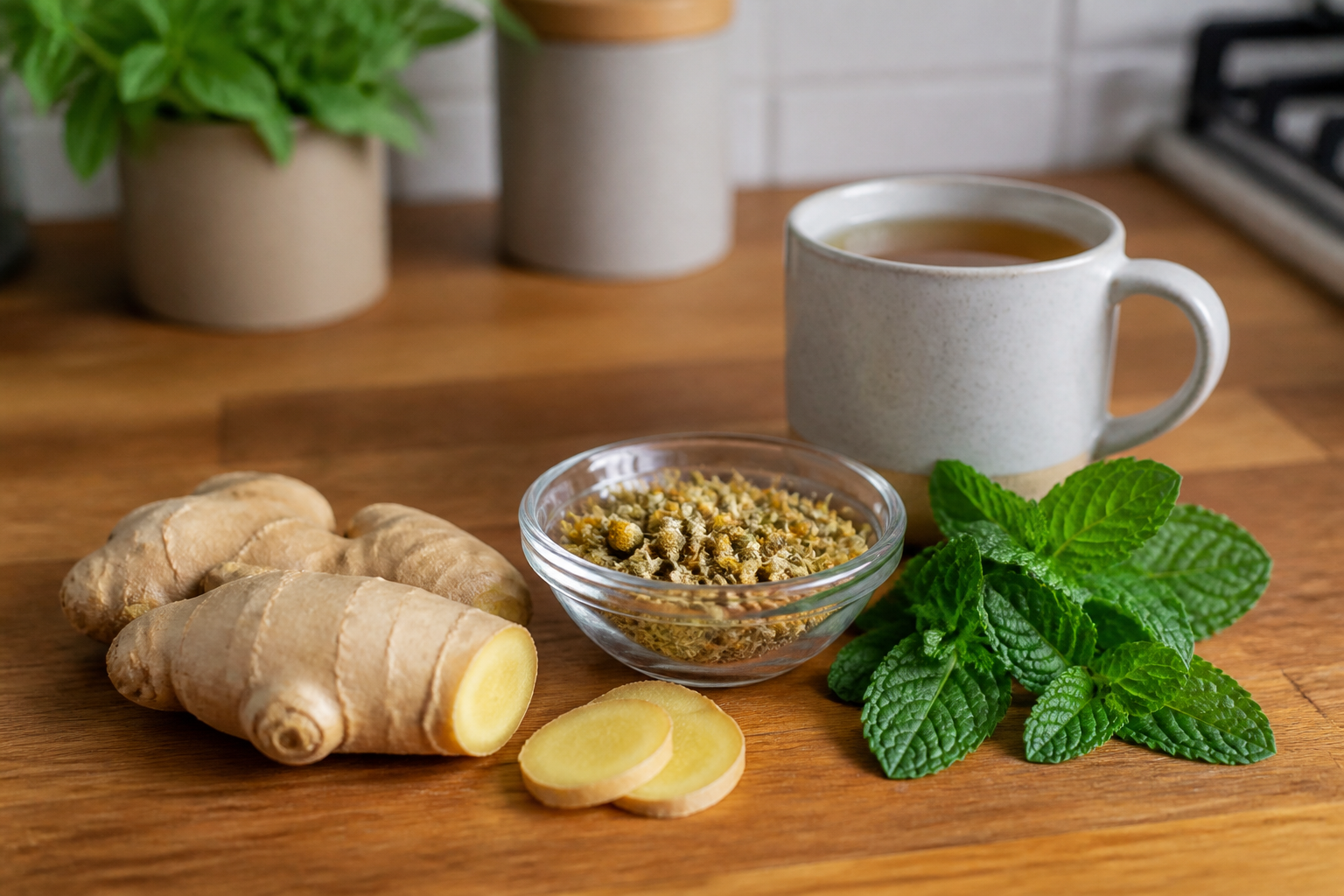
Ginger tea, peppermint tea, chamomile, and bland foods like rice and toast are the best-supported natural remedies for an upset stomach without medication. Most mild cases of nausea, indigestion, and cramping improve within one to two hours using these approaches, but fever, blood in the stool, or symptoms lasting more than 48 hours require medical attention.
Natural remedies for upset stomach without medication are something almost every household needs at some point — and not just during a grid-down scenario. Whether the pharmacy is closed on a Sunday night, you are trying to avoid overusing antacids, or you simply want to know what is actually in your kitchen that can help, this is a question worth answering with evidence rather than guesswork.
Digestive complaints — nausea, indigestion, bloating, cramping — are among the most common reasons people reach for over-the-counter drugs. They are also among the most common ailments that respond reasonably well to simple, food-based interventions when the underlying cause is minor. The key word is minor. This article covers what works for the everyday stomach upset that does not require a doctor visit, and it is equally clear about where the line is.
I spent years working wildland fire, where a sick crew member in a remote camp was a real operational problem. You learned fast which remedies were worth packing and which were folklore. The answers were sometimes surprising — and simpler than most people expect.
Why Your Stomach Gets Upset (And Why It Matters for Treatment)
Understanding the basic cause of an upset stomach helps you pick the right remedy rather than throwing everything at it. The digestive system is sensitive to three broad categories of irritants: what you ate, how your gut is moving, and what signals your nervous system is sending.
Nausea without vomiting is often a motility issue — the stomach is sluggish or hypersensitive. Indigestion, technically called dyspepsia, usually involves excess acid or poor gastric emptying. Cramping can be smooth-muscle spasm in the intestine, often triggered by gas, food intolerance, or a mild infection. Knowing which of these you are dealing with shapes which remedies are most likely to help.
This distinction also matters for safety. Nausea and cramping that come with fever, blood in the stool, severe pain, or symptoms lasting more than 48 hours are not in the 'treat at home' category. Those warrant a call to a medical professional regardless of what supplies you have on hand. Every natural remedy in this article is appropriate only for mild, self-limiting digestive upset in otherwise healthy adults.
Ginger: The Most Evidence-Backed Remedy for Nausea
Ginger has more clinical support for reducing nausea than any other food-based remedy, and it is probably already in your kitchen. Multiple controlled trials — including a 2014 review published in the British Journal of Anesthesia — found that ginger reduced postoperative nausea and that the evidence base for motion sickness and pregnancy-related nausea is also meaningful, though more variable.
The active compounds, gingerols and shogaols, appear to work on serotonin receptors in the gut and brainstem — the same pathway targeted by some pharmaceutical antiemetics. That does not make ginger equivalent to prescription medication, but it does explain why it is not simply placebo.
Practical use: steep one teaspoon of freshly grated ginger root in eight ounces of hot water for ten minutes, strain, and sip slowly. Dried ginger powder works, though fresh is generally considered more potent. Commercially sold ginger ale typically contains very little actual ginger, so it is not a reliable substitute. Ginger candy or chews made with real ginger are a useful portable option.
Dosage matters. Studies typically used 1 to 1.5 grams of ginger, which roughly corresponds to one teaspoon of fresh grated root. More is not necessarily better, and at very high doses ginger can act as a mild blood thinner — a consideration if you take anticoagulant medications.
Peppermint and Chamomile: Two Different Tools for Two Different Problems
Peppermint and chamomile are both commonly recommended for digestive complaints, but they work differently and are best suited to different symptoms — treating them as interchangeable misses the point.
Peppermint's primary active compound, menthol, relaxes smooth muscle in the gastrointestinal tract. This makes peppermint tea or diluted peppermint oil genuinely useful for intestinal cramping and bloating associated with gas or irritable bowel-type symptoms. A 2014 meta-analysis in the Journal of Clinical Gastroenterology found peppermint oil significantly reduced abdominal pain in irritable bowel syndrome patients. For a one-off episode of cramping and gas, a cup of peppermint tea is a reasonable first step.
However, peppermint relaxes the lower esophageal sphincter, which means it can worsen acid reflux and heartburn. If your upset stomach includes a burning sensation rising into your chest, peppermint is the wrong choice.
Chamomile works differently. It has mild anti-inflammatory and antispasmodic properties and is better suited to general stomach upset and nausea, particularly when anxiety or stress is a contributing factor. The evidence is less robust than for ginger, but chamomile has a long, reasonably safe track record for mild use. Steep a tea bag or one tablespoon of dried chamomile flowers for five to ten minutes. Avoid it if you have a known ragweed allergy, as cross-reactivity is possible.
What to Eat (and Not Eat) When Your Stomach Is Upset
What you put in your stomach matters as much as any herbal remedy, and getting this wrong can extend your symptoms by hours. The goal is low demand on a digestive system that is already struggling.
The BRAT diet — bananas, rice, applesauce, toast — has been a standard recommendation for decades. It fell somewhat out of favor in pediatric medicine because it is nutritionally incomplete for extended use, but for adults managing a short-term upset stomach, it remains a sensible framework. These foods are low in fiber, low in fat, and easy to digest, which reduces irritation and helps firm loose stools if diarrhea is present.
Clear broths — especially bone broth or a simple vegetable broth — help replace electrolytes lost through vomiting or diarrhea without taxing the gut. Small, frequent sips of plain water or diluted electrolyte solution are better than trying to drink large amounts at once, which can trigger further nausea.
Avoid dairy, fatty foods, spicy foods, coffee, and alcohol until symptoms have resolved for at least several hours. These are not intuitive to everyone — some people reach for a bland cheeseburger or a ginger ale with ice cream. Dairy in particular can slow gastric emptying and worsen nausea.
One genuinely useful data point: research on probiotics for acute infectious diarrhea suggests that certain Lactobacillus strains can modestly shorten duration. This is not a fast-acting remedy, but if you have a quality probiotic supplement on hand, it is reasonable to start it early.
- Eat small amounts frequently rather than nothing or a full meal
- Start with clear liquids, progress to BRAT foods as tolerated
- Sip electrolyte solution or diluted sports drink to replace lost salts
- Avoid dairy, fat, caffeine, alcohol, and spicy food until fully recovered
- Plain crackers (saltines) can help settle nausea by absorbing excess acid
Our Recommendation: Home Remedies You Can Trust
An upset stomach is rarely dangerous on its own, but it becomes a real problem when you cannot quickly access a pharmacy — whether because it is 2 a.m., a storm has closed roads, or supply disruptions have emptied the shelves. Knowing what works means having that knowledge before you need it, not searching for it while you are miserable.
The honest limitation of free information — including this article — is that it covers the basics but stops short of a comprehensive, organized reference you can actually use under pressure. Knowing that ginger works for nausea is useful; knowing the right preparation for your specific situation, what combinations are safe, how to adapt when you do not have the ideal ingredient, and where exactly the line is between home care and calling for help is a different level of useful. Scattered blog posts and YouTube videos do not give you that structure.
Home Remedies You Can Trust is a digital ebook that fills exactly that gap. It covers kitchen-based herbal and food remedies for common ailments — including digestive complaints — with clear, practical guidance on when professional care is still necessary. It is not folklore dressed up as medicine; it is aimed at people who want actionable, non-sensationalized information. At $17.99 (reduced from $47), it is a one-time reference you can have on your phone, tablet, or printed out in a binder before you ever need it. If your household preparedness plan has a gap in the everyday medical category, that is a reasonable place to close it. For the next step, read Trauma Kit Essentials: What Every Kit Needs Before the Ambulance Arrives.
Our recommendation
Home Remedies You Can Trust
Check availability →This article contains an affiliate link. If you buy through it, we may earn a commission at no extra cost to you.
Frequently asked questions
What is the fastest natural remedy for an upset stomach?
Ginger tea made from fresh or dried ginger root is the fastest-acting and best-supported natural option for nausea. For cramping and gas, peppermint tea can bring noticeable relief within 20 to 30 minutes. Neither works as fast as some over-the-counter medications, so 'fastest' is relative — expect improvement within 30 to 60 minutes rather than instant relief.
Does baking soda actually help an upset stomach?
Baking soda (sodium bicarbonate) neutralizes stomach acid and can provide short-term relief from heartburn and acid indigestion. Half a teaspoon in four ounces of water is the common household dose. It should not be used regularly, as it contains significant sodium and can disrupt the body's acid-base balance with repeated use. It is not appropriate for nausea without indigestion.
Is ginger or peppermint better for nausea?
Ginger has stronger clinical evidence for nausea specifically. Peppermint is better suited to cramping and bloating, and it can actually worsen nausea in some people by relaxing the esophageal sphincter and allowing acid to rise. If nausea is your primary symptom, reach for ginger first.
When should you stop treating an upset stomach at home and see a doctor?
Stop treating at home and seek medical evaluation if symptoms include: fever above 101.5 degrees F, blood in vomit or stool, severe or worsening abdominal pain, symptoms lasting more than 48 hours without improvement, signs of dehydration (extreme thirst, dark urine, dizziness), or if the person affected is an infant, elderly, pregnant, or immunocompromised.
Can apple cider vinegar help with indigestion?
Apple cider vinegar is widely recommended online for indigestion, but the evidence is weak and the mechanism is disputed. Some people report relief; others find it worsens symptoms, particularly heartburn. If you try it, dilute one to two teaspoons in a full glass of water — never drink it undiluted, as it can damage tooth enamel and irritate the esophagus. It is not a first-line recommendation.
Related guides
Sources
- NIH National Center for Complementary and Integrative Health: Ginger
- NIH National Center for Complementary and Integrative Health: Peppermint Oil
- MedlinePlus (NIH): Nausea and Vomiting — Adults
- CDC: Managing Acute Gastroenteritis Among Children — Oral Rehydration, Maintenance, and Nutritional Therapy
General preparedness information, not medical or legal advice. Follow instructions from your local emergency authority during an active event.
Field notes by email
Get the next guide before you need it
One email when a new field guide drops — water, food, power, medicine. No spam, no daily noise, unsubscribe in one click.
Comments on this guide
Questions, corrections and field reports from your own setup are welcome.
No comments yet. Be the first to add a field report.