
Medicine
How to Treat an Infected Wound Without Antibiotics: A Step-by-Step Home Guide

By Ephraim Rusk · · 11 min read
This article contains an affiliate link. If you buy through it, we may earn a commission at no extra cost to you.
Quick answer
Clean the wound thoroughly with clean water and mild soap, remove visible debris, and apply raw honey or dilute povidone-iodine if available — these have documented antimicrobial evidence. Watch closely for spreading redness, swelling, red streaks, or fever, which signal an infection progressing beyond home care.
Treating an infected wound without antibiotics is one of the most searched — and most misunderstood — topics in home preparedness medicine. The question isn't paranoid; it's practical. Whether you're days from a clinic on a backcountry trip, riding out a regional disaster, or simply watching a cut go sideways over a holiday weekend, knowing what to do before professional care is available is basic medical literacy.
Wound infections are one of the leading causes of preventable death in austere environments, and they move fast. A shallow scrape that looks irritated on Monday can develop cellulitis by Wednesday and systemic infection by Friday if handled wrong — or ignored. The good news is that the early stages of wound infection respond well to proper mechanical cleaning and a handful of evidence-supported topical measures, most of which you can keep in a well-stocked home kit.
This guide walks through how to identify an infected wound, how to clean and dress it properly at home, which plant and household remedies have real science behind them, which are folklore you should skip, and exactly when the situation has moved past what any home remedy can handle. No doomsday theatre — just the information you'd want on hand before you need it.
How to Tell If a Wound Is Actually Infected (Not Just Healing Normally)
A wound is infected when bacteria have colonized the tissue and your body's inflammatory response is no longer containing them — not every red or tender wound meets that bar. Normal wound healing produces some redness, warmth, and mild swelling in the first 24 to 48 hours as part of the inflammatory phase. The difference lies in the trajectory: healing wounds improve steadily; infected wounds worsen.
The classic signs of local wound infection are captured in the acronym PRISH: Pain (increasing, not decreasing), Redness (spreading beyond the wound edge), Induration (hardness or firmness in surrounding tissue), Swelling (growing rather than subsiding), and Heat. Add purulent discharge — yellow, green, or foul-smelling pus — and the diagnosis is clear.
Two signs demand urgent attention even in a grid-down situation and should never be waited out: red streaks radiating outward from the wound (a sign of lymphangitis, meaning the infection is tracking along lymph channels toward the bloodstream) and systemic symptoms like fever above 101°F, chills, rapid heartbeat, or confusion. These indicate the infection is no longer local. At this stage, home remedies are delay tactics at best. If evacuation or professional care is physically possible, pursue it immediately.
One practical field note: wounds that are deep, involve a puncture, were contaminated with soil or animal contact, or occurred in someone who is immunocompromised or diabetic carry a meaningfully higher infection risk than clean lacerations. Adjust your monitoring frequency accordingly — checking every 8 to 12 hours in the first two days rather than once daily.
Wound Cleaning: The Single Most Important Step (and How Most People Do It Wrong)
Thorough mechanical cleaning is more effective at preventing and arresting early wound infection than any topical remedy you can apply afterward — this is not an opinion, it is the basis of standard wound care protocols used by emergency physicians worldwide.
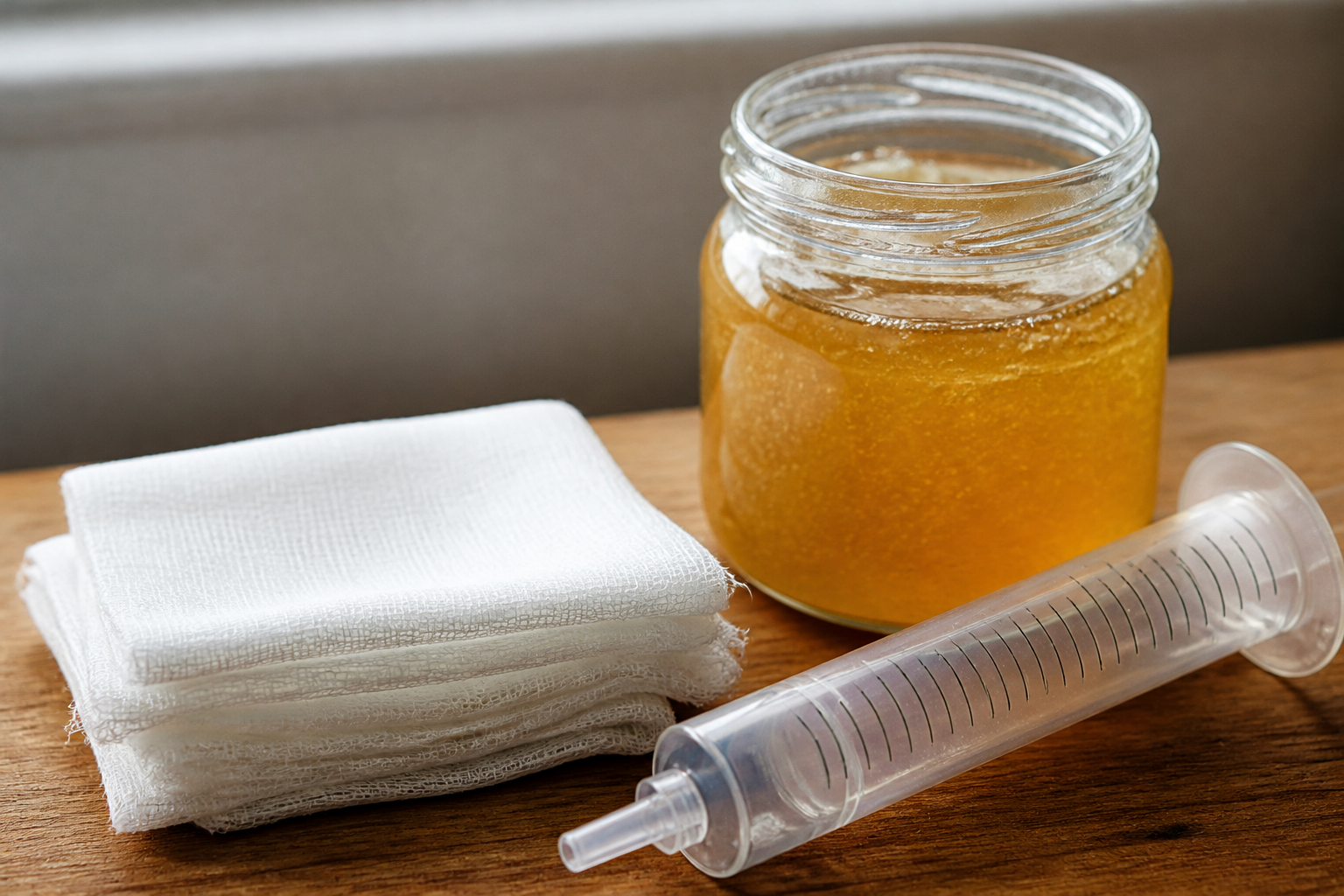
The goal of cleaning is irrigation: forcefully flushing debris, bacteria, and devitalized tissue from the wound with enough fluid volume and pressure to physically remove contaminants. A slow pour from a bottle does not accomplish this. The standard clinical recommendation is at least 100 to 300 milliliters of clean water delivered with enough pressure to visibly disturb the wound bed — a 35mL syringe with a 19-gauge needle or tip produces approximately 8 PSI, which research has shown to be effective. In the field, a zip-lock bag with a pinhole punched in one corner works reasonably well.
Potable water is preferred. Sterile saline is ideal. Studies have shown that clean tap water irrigates wounds as effectively as sterile saline in most community settings, according to research published through the Cochrane collaboration. If your water source is uncertain, boil and cool it first.
What not to use for wound irrigation: hydrogen peroxide, full-strength iodine, and rubbing alcohol. All three damage healthy fibroblasts and granulation tissue, slowing healing and potentially worsening outcomes. Hydrogen peroxide in particular is a persistent myth in home wound care — it produces visible bubbling that feels productive but is cytotoxic to the new cells you need.
After irrigation, remove any visible foreign material with clean tweezers. If debris is deep or embedded and you cannot remove it cleanly, leave it — digging aggressively causes more tissue damage and introduces more bacteria than leaving the wound open for professional debridement later.
- Use 100-300mL of clean or boiled water with pressure — a pinhole bag, squeeze bottle, or improvised syringe
- Flush at 8-13 PSI for dirty wounds, lower pressure for clean cuts
- Use clean tweezers to remove surface debris only — do not dig
- Skip hydrogen peroxide, straight rubbing alcohol, and undiluted iodine on open tissue
- Pat dry with clean cloth or gauze — never rub across the wound bed
Home Remedies With Real Evidence Behind Them
Several plant-based and household antimicrobial agents have genuine peer-reviewed evidence supporting their use on infected wounds — not as replacements for antibiotics in serious infections, but as legitimate first-line topical measures when professional care is unavailable.
Raw honey, particularly Manuka honey (rated by Unique Manuka Factor or UMF), is the most evidence-supported topical wound treatment outside conventional medicine. It works through multiple mechanisms: osmotic dehydration of bacteria, hydrogen peroxide generation, low pH, and bioactive compounds including methylglyoxal. Clinical studies — including a 2015 Cochrane review of honey as a wound treatment — have found it effective at reducing bacterial load and promoting healing in minor to moderate wounds. Apply a generous layer directly to the wound bed, cover with a clean dressing, and change it every 24 hours. Commercially available medical-grade honey dressings exist, but raw, unprocessed honey performs similarly in the research.
Dilute povidone-iodine (Betadine) at 0.5% to 1% concentration — not the full 10% solution from the bottle — has documented antimicrobial activity and acceptable tolerability for wound tissue. Dilute one part 10% Betadine in nine to nineteen parts clean water. This is a meaningful distinction: undiluted povidone-iodine is toxic to wound healing cells, but diluted it becomes a useful antiseptic rinse.
Garlic (allicin) has a reasonable body of in-vitro and some clinical evidence for antimicrobial activity, including against common wound pathogens like Staphylococcus aureus. Crushed fresh garlic applied directly to a wound is irritating and can cause contact dermatitis in many people — this is not a first-choice approach. Where garlic has more practical utility is as a dietary adjunct, supporting immune function while you manage the wound topically.
Calendula (pot marigold) preparations — creams or infused oils — have demonstrated anti-inflammatory and modest antimicrobial properties in dermatological research and are well tolerated on skin. They are more appropriate as a healing support once the acute infection is controlled than as a primary antimicrobial. Aloe vera gel similarly supports wound healing and reduces inflammation but should not be applied to deep or puncture wounds, where it may promote surface closure over unresolved deep infection.
Dressing, Monitoring, and Knowing When to Stop Treating at Home
A clean dressing protects a wound from recontamination and maintains the moist wound environment that supports faster epithelialization — dry scabs form a barrier to healing, not an aid to it, despite persistent folklore to the contrary.
For minor infected wounds being managed at home, change dressings every 24 hours or sooner if they become saturated. At each dressing change, re-irrigate gently, assess the wound for the signs of progression listed earlier, and reapply your chosen topical agent. Keep a written log: date, time, wound appearance, any systemic symptoms. If you need to hand off care to a professional, this record is genuinely useful.
Primary closure — pulling wound edges together with tape strips, butterfly bandages, or improvised sutures — should not be done on a wound that is already infected. Closing an infected wound traps bacteria and creates ideal conditions for abscess formation. Let infected wounds heal by secondary intention (open, from the inside out) under a clean dressing.
The threshold for evacuation or professional care, even in a constrained situation, should be set conservatively. Seek professional care — as urgently as circumstances allow — if any of the following are present: red streaks spreading from the wound, fever above 101°F, wound that is not improving after 48 to 72 hours of proper home care, visible abscess that is enlarging, wound involving a joint or the face, or any wound in a person with diabetes or a compromised immune system. Sepsis — systemic infection — can develop in hours in severe cases and carries a significant mortality rate even in hospital settings. No home remedy addresses sepsis.
- Change dressings every 24 hours; re-irrigate gently at each change
- Do not close (tape or suture) a wound that is already infected
- Log wound appearance and systemic symptoms at each dressing change
- Evacuate if red streaks, fever, or no improvement after 48-72 hours appear
- Never use home treatment as a substitute for care in high-risk individuals (diabetic, immunocompromised)
Our Recommendation: The Doctor's Book of Survival Home Remedies
An infected wound that progresses unchecked — because the right information wasn't available at the right moment — can move from manageable to life-threatening in under a week. That is the specific risk this article has been addressing, and it does not go away because you live near a hospital: roads close, clinics fill, and emergencies have a habit of clustering.
The challenge with relying on general internet searches in a real emergency is noise: the ratio of folklore to evidence is terrible, sourcing is almost never given, and there is no framework for the decision that actually matters most — when is this beyond home care? Free resources rarely answer that question clearly, and a scattered search history is not something you can hand to a family member during a crisis.
The Doctor's Book of Survival Home Remedies, written by board-certified surgeon Dr. John Herzog, addresses roughly 20 common medical emergencies — including wound infection — using plant, herb, and household-item remedies framed around the clinical science rather than folk tradition. At 400 pages and $37, it is the kind of single reference that consolidates the decision-making framework, the evidence-supported remedies, and the escalation criteria into one place you can reach in the dark. If you are building a home preparedness library and wound care is a gap, this is a practical place to close it. For the next step, read Natural Remedies for a UTI Without Antibiotics: What Actually Works (and What Doesn't).
Our recommendation
The Doctor's Book of Survival Home Remedies
Check availability →This article contains an affiliate link. If you buy through it, we may earn a commission at no extra cost to you.
Frequently asked questions
Can an infected wound heal without antibiotics?
Minor, superficial wound infections can often resolve with thorough mechanical cleaning and evidence-supported topical treatments like dilute povidone-iodine or raw honey, without systemic antibiotics. However, infections that are spreading, involve deeper tissue, cause fever, or show red streaks require professional medical care and likely systemic antibiotics. Do not attempt to ride out a worsening infection at home.
What are the signs that a wound infection is getting worse?
Increasing pain, expanding redness beyond the wound margin, growing swelling, purulent (pus) discharge, red streaks radiating outward, fever above 101°F, chills, or rapid heartbeat all indicate a worsening infection. Any combination of the last four warrants urgent professional care — these suggest the infection is systemic, not just local.
Is honey really effective for infected wounds?
Yes, particularly raw or medical-grade Manuka honey. Multiple peer-reviewed studies, including a Cochrane review, have documented its antimicrobial and wound-healing properties. It works through several mechanisms including osmotic action and hydrogen peroxide generation. It is not a substitute for antibiotics in serious infections, but it is one of the most evidence-supported topical agents available outside a clinical setting.
Should I use hydrogen peroxide on an infected wound?
No. Despite its widespread use, hydrogen peroxide is cytotoxic to the fibroblasts and granulation tissue your body uses to heal wounds. It may reduce surface bacteria briefly but damages the healing tissue beneath. Standard wound care guidance from emergency medicine and wound care specialists recommends against it. Use clean water irrigation instead.
How do I know when a wound infection is beyond home treatment?
Stop home treatment and seek professional care when you see red streaks spreading from the wound, fever above 101°F, no improvement after 48 to 72 hours of proper cleaning and dressing, an abscess that is enlarging, or the wound involves a joint, the face, or a person who is diabetic or immunocompromised. These are signs the infection has moved beyond what topical care can address.
Related guides
Sources
- CDC — Wound Care and Infection Prevention
- NIH / Cochrane — Honey as a Topical Treatment for Wounds
- NIH — Wound Irrigation and Infection: Systematic Review
- FEMA / Ready.gov — Medical Preparedness
General preparedness information, not medical or legal advice. Follow instructions from your local emergency authority during an active event.
Field notes by email
Get the next guide before you need it
One email when a new field guide drops — water, food, power, medicine. No spam, no daily noise, unsubscribe in one click.
Comments on this guide
Questions, corrections and field reports from your own setup are welcome.
No comments yet. Be the first to add a field report.