
Medicine
How to Treat an Infected Wound When You Can't Get to a Doctor

By Ephraim Rusk · · 11 min read
This article contains an affiliate link. If you buy through it, we may earn a commission at no extra cost to you.
Quick answer
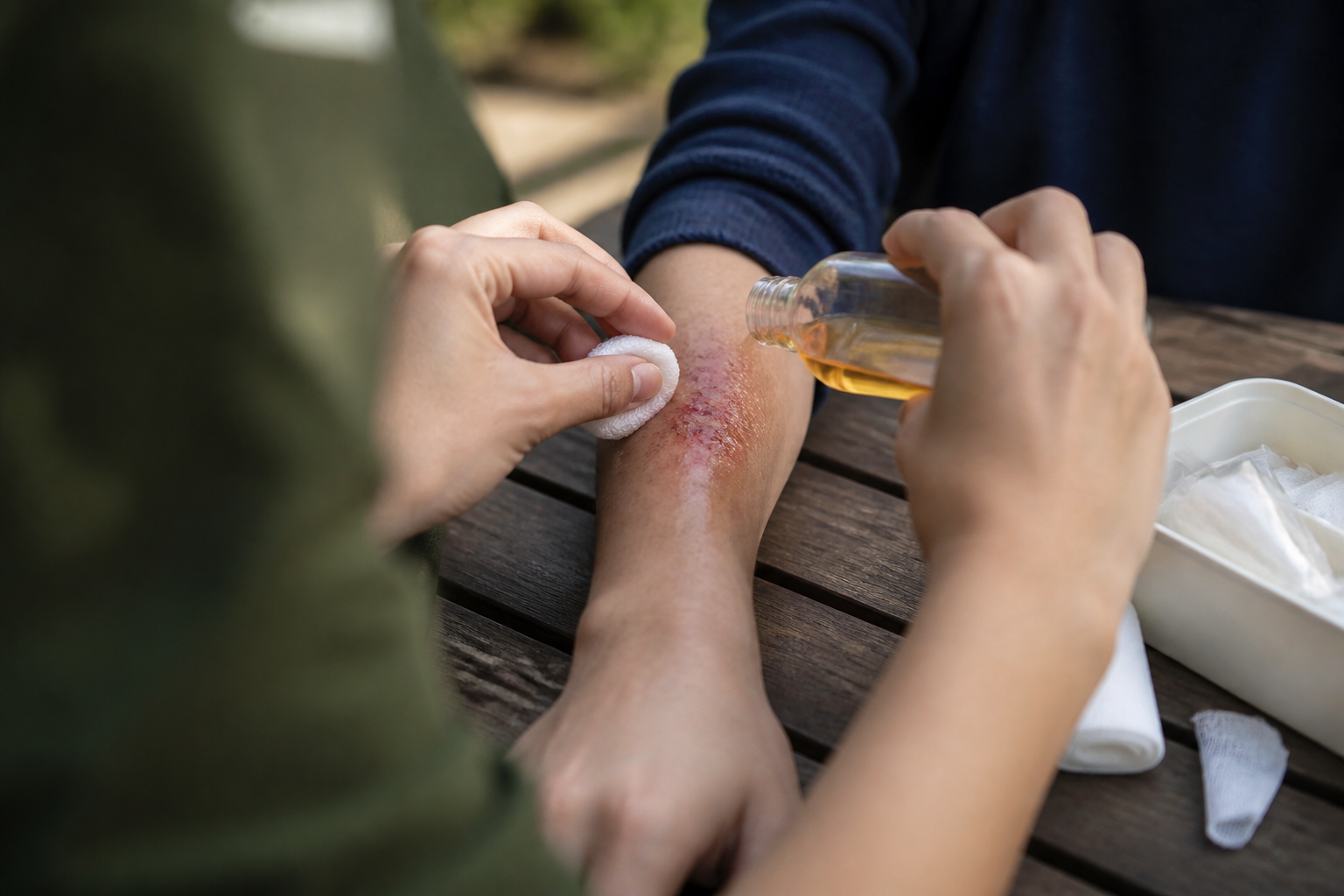
Clean the wound thoroughly with potable water and a mild antiseptic, remove any visible debris, apply a proven topical antimicrobial such as medical-grade honey or dilute povidone-iodine, and monitor for spreading redness or fever that signals the infection is advancing beyond topical control.
A blister tears open on a long trail day. A wire nick in the barn gets dirt in it before you notice. A kitchen cut gets ignored until the next morning when the skin around it is red and warm to the touch. None of these feel like emergencies at first — until they are.
Wound infections are one of the most common medical problems that turn serious in off-grid or disaster scenarios, precisely because they start small and the window to act closes faster than most people expect. Cellulitis can spread inches per hour. An abscess that was marble-sized on Monday can require surgical drainage by Thursday. Sepsis — systemic bloodstream infection — kills tens of thousands of Americans every year even with hospital-level care available.
This article is for the situation where professional care is delayed, not forever unavailable. The goal is to give you a practical, grounded framework: how to read what a wound is telling you, what the evidence actually says about non-prescription interventions, and where the hard limits of home treatment are.
Recognizing the Stages of Wound Infection
Not every red wound is infected. Inflammation — redness, warmth, and mild swelling — is a normal part of the healing process in the first 24 to 72 hours. The problem is distinguishing that normal response from early infection, because the treatment window is widest when you catch it early.
The classic signs of local infection, documented in clinical wound care literature, are the five 'cardinal signs': calor (warmth), rubor (redness), tumor (swelling), dolor (pain), and functio laesa (loss of normal function). What matters for your decision is the trend, not a single snapshot. Is the redness spreading beyond the wound edge? Mark the border with a pen and check it in two hours — an expanding border is a reliable early warning.
Purulent discharge — pus — confirms infection. Clear or slightly pink fluid seeping from a wound in the first day or two is usually normal exudate. Yellow, green, or thick white discharge with an odor is not. A wound that smells sweet and has black or gray tissue at its center may indicate anaerobic bacterial involvement, which is more dangerous and harder to treat topically.
Systemic signs tell you the infection has moved beyond the local tissue and into your body as a whole. Fever above 38.3 degrees Celsius (101 degrees Fahrenheit), chills, rapid heart rate, confusion, or red streaking running away from the wound toward the body's core are all evacuation-level signals. Red streaking, sometimes mistakenly called 'blood poisoning,' indicates lymphangitis — the infection is traveling through your lymphatic system. At that point, topical care is no longer sufficient and systemic antibiotics are required.
- Early local infection: expanding redness, warmth, increasing pain after 48 hours
- Moderate local infection: pus, swelling tight enough to feel shiny, wound edges failing to close
- Severe local infection: abscess formation, foul odor, necrotic (dead/black) tissue
- Systemic infection warning signs: fever, chills, red streaking, rapid pulse, altered mental status
The First and Most Important Step: Irrigation
Irrigation — flushing the wound with clean water under pressure — is the single highest-impact intervention you can perform, and it costs almost nothing. Research published in the Annals of Emergency Medicine found that high-pressure irrigation reduced infection rates significantly compared to low-pressure or no irrigation, regardless of what solution was used.
The standard clinical target is 5 to 8 psi of pressure. You can approximate this with a 35 mL or larger syringe and an 18-gauge needle or blunt tip, held about 2 inches from the wound. In the field without a syringe, a plastic bag with a pinhole, a water bottle with a sports cap, or even a hydration bladder tube can generate useful pressure. What you are trying to do is mechanically remove bacteria, debris, and dead tissue — the biofilm that forms in a wound within hours is what makes infection difficult to treat.
Irrigate with the cleanest water available. Sterile saline is ideal. Potable tap water is clinically acceptable for most wounds — a 2015 Cochrane review found no significant difference in infection rates between saline and clean tap water for wound irrigation. Do not use hydrogen peroxide directly in a wound cavity; it causes tissue damage that can slow healing and may worsen outcomes. Dilute povidone-iodine (0.5 to 1 percent solution, not full-strength) is appropriate for a brief antiseptic rinse but should not be left in contact with tissue as a soak.
Topical Antimicrobials With Actual Evidence Behind Them
Once the wound is irrigated and any obvious debris is removed, you have several evidence-backed topical options that can reduce bacterial load and support healing when pharmaceutical antibiotics are unavailable or delayed.
Medical-grade honey — most studied as Manuka honey with a Unique Manuka Factor (UMF) rating of 10 or higher — has the strongest non-prescription evidence base. A 2015 Cochrane review of 26 randomized controlled trials concluded that honey dressings are more effective than conventional dressings for superficial and partial-thickness burns and for short-term management of infected wounds. Its antimicrobial effect comes from hydrogen peroxide release, a low pH environment, osmotic action, and methylglyoxal — mechanisms that work against a broad spectrum of bacteria including some antibiotic-resistant strains. Apply a thin layer directly to the wound and cover with a clean dressing. Change it every 24 to 48 hours.
Povidone-iodine at 0.5 to 1 percent concentration (diluted from the 10 percent solution sold in drugstores) is a broad-spectrum antiseptic with decades of clinical use. It is most appropriate as a rinse or short-contact treatment rather than a continuous dressing because full-strength concentrations are cytotoxic. Silver sulfadiazine cream, sold over the counter as Silvadene in some markets, has strong evidence for burn wound care and reasonable evidence for infected lacerations.
Among plant-based options, garlic extract has demonstrated in vitro activity against Staphylococcus aureus, including MRSA strains, in laboratory studies — though the jump from laboratory to clinical wound care is not fully established. Calendula preparations have a long traditional use with some small clinical studies supporting their anti-inflammatory and wound-healing properties. These are reasonable adjuncts when pharmaceutical options are exhausted, but they are not substitutes for irrigation, debridement, and proper wound closure.
- Medical-grade Manuka honey (UMF 10+): apply directly, change dressing every 24-48 hours
- Dilute povidone-iodine (0.5-1%): rinse or short-contact, not a continuous soak
- Silver sulfadiazine cream: particularly useful for burns with secondary infection
- Raw garlic (crushed, applied briefly): adjunct only, can cause skin burns if overused
- Calendula cream or tincture: mild anti-inflammatory support for wound edges
Wound Closure, Dressing, and Daily Management
The decision of whether to close a wound is as important as what you put on it. The general principle in field and emergency medicine is: when in doubt, leave it open. A contaminated or already-infected wound that is closed traps bacteria and can rapidly progress to abscess or necrotizing infection. Primary closure — stitches, staples, skin tape — is appropriate only for clean wounds treated within roughly six hours of injury in a non-contaminated environment.
For infected or high-risk wounds, wet-to-dry dressing changes or moist wound dressings applied loosely are preferred. The goal is to keep the wound environment moist enough for tissue healing without creating the anaerobic, warm, wet conditions that accelerate bacterial growth. Change dressings at least once daily, or whenever the dressing becomes saturated. Each change is an opportunity to irrigate again and assess the wound's progress.
Elevation and immobilization matter more than most people give them credit for. An infected hand kept at waist level will swell significantly more than one kept above heart level. Swelling increases tissue pressure, reduces local blood flow and immune cell delivery, and slows healing. Wrap an infected extremity wound loosely — compression that reduces swelling is beneficial, but tight wrapping that reduces circulation makes the infection harder to fight.
Keep a written log: note the wound size, the border of redness (draw it on the skin with a marker), temperature, and any systemic symptoms each time you assess. In a multi-day scenario without professional care available, that log is how you detect slow deterioration that is easy to miss hour by hour.
Our Recommendation: The Doctor's Book of Survival Home Remedies
Wound care is one thing. But the honest reality of a real grid-down or remote scenario is that you will face medical problems you did not specifically research ahead of time — a deep puncture wound, a bite, an abscess that needs draining, an allergic reaction, a high fever in a child. Having a single, well-organized reference that covers the most likely emergencies in plain language, written by someone with actual surgical credentials, is a different category of preparedness than a first-aid course alone.
The Doctor's Book of Survival Home Remedies, written by board-certified surgeon Dr. John Herzog, is a 400-page guide covering approximately 20 common medical emergencies using plant-based, herbal, and household-item interventions. What separates it from generic herbal remedy books is the framing: Dr. Herzog approaches each topic from a clinical perspective, explaining what is actually happening physiologically and why a given remedy does or does not have a mechanism of action behind it. For wound infections specifically, it covers the decision tree between topical management and when you genuinely need to consider evacuation or acquiring prescription antibiotics through other means — the kind of judgment call that pure herb-and-remedy guides typically avoid.
If you are building a home medical reference library for scenarios where professional care is unavailable or delayed, this book belongs in it alongside a good first aid manual and a current edition of the Wilderness Medicine handbook. It is available through the link below. For the next step, read Natural Remedies for Upset Stomach Without Medication: What Actually Works.
Our recommendation
The Doctor's Book of Survival Home Remedies
Check availability →This article contains an affiliate link. If you buy through it, we may earn a commission at no extra cost to you.
Frequently asked questions
How do I know if a wound infection is getting worse or better?
Mark the border of redness with a pen and check it every two hours. If the redness is shrinking or stable, treatment is working. If it is expanding, the infection is progressing. Also watch for fever, increasing pain, pus with odor, and any red streaking tracking away from the wound — those are signs the infection is beyond topical control.
Can you treat a wound infection without antibiotics?
For mild, localized infections caught early, aggressive irrigation, proper debridement, and topical antimicrobials like medical-grade honey or dilute povidone-iodine can be effective. Deep infections, abscesses, spreading cellulitis, or any sign of systemic infection (fever, red streaking, rapid pulse) require systemic antibiotics and professional evaluation when at all possible.
Is hydrogen peroxide safe to use on infected wounds?
No, not directly inside the wound. Hydrogen peroxide is cytotoxic — it damages the healthy tissue cells you need for healing, not just bacteria. It is acceptable for brief cleaning of intact skin around a wound but should not be used as a wound irrigant or dressing. Potable water, saline, or very dilute povidone-iodine are better choices.
Does Manuka honey actually work on wound infections?
Yes, the evidence is reasonably strong. A Cochrane systematic review of 26 randomized controlled trials found medical-grade honey outperformed conventional dressings for infected and burn wounds in several outcome measures. The antimicrobial action comes from multiple mechanisms including hydrogen peroxide release, low pH, and methylglyoxal — making bacterial resistance less likely than with single-agent antibiotics.
When should I stop treating a wound at home and seek emergency care?
Seek emergency care immediately if you see red streaking traveling away from the wound, develop a fever above 38.3 C (101 F), feel confused or unusually weak, notice the wound area becoming numb or developing black or gray tissue, or if the wound is expanding rapidly despite 24-48 hours of proper treatment. These are signs the infection has moved beyond what topical care can address.
Sources
- CDC — Surgical Site Infection (SSI) Prevention and Wound Care Guidance
- NIH National Library of Medicine — Cochrane Review: Honey as a Topical Treatment for Wounds
- NIH National Library of Medicine — Wound Irrigation and Infection Prevention Review
- FEMA / Ready.gov — Emergency Health and First Aid Preparedness
General preparedness information, not medical or legal advice. Follow instructions from your local emergency authority during an active event.
Field notes by email
Get the next guide before you need it
One email when a new field guide drops — water, food, power, medicine. No spam, no daily noise, unsubscribe in one click.
Comments on this guide
Questions, corrections and field reports from your own setup are welcome.
No comments yet. Be the first to add a field report.