
Power
DIY 3D Solar Sphere for Small Off-Grid Power: What the Concept Promises and What to Realistically Expect

By Ephraim Rusk · · 10 min read
This article contains an affiliate link. If you buy through it, we may earn a commission at no extra cost to you.
Quick answer
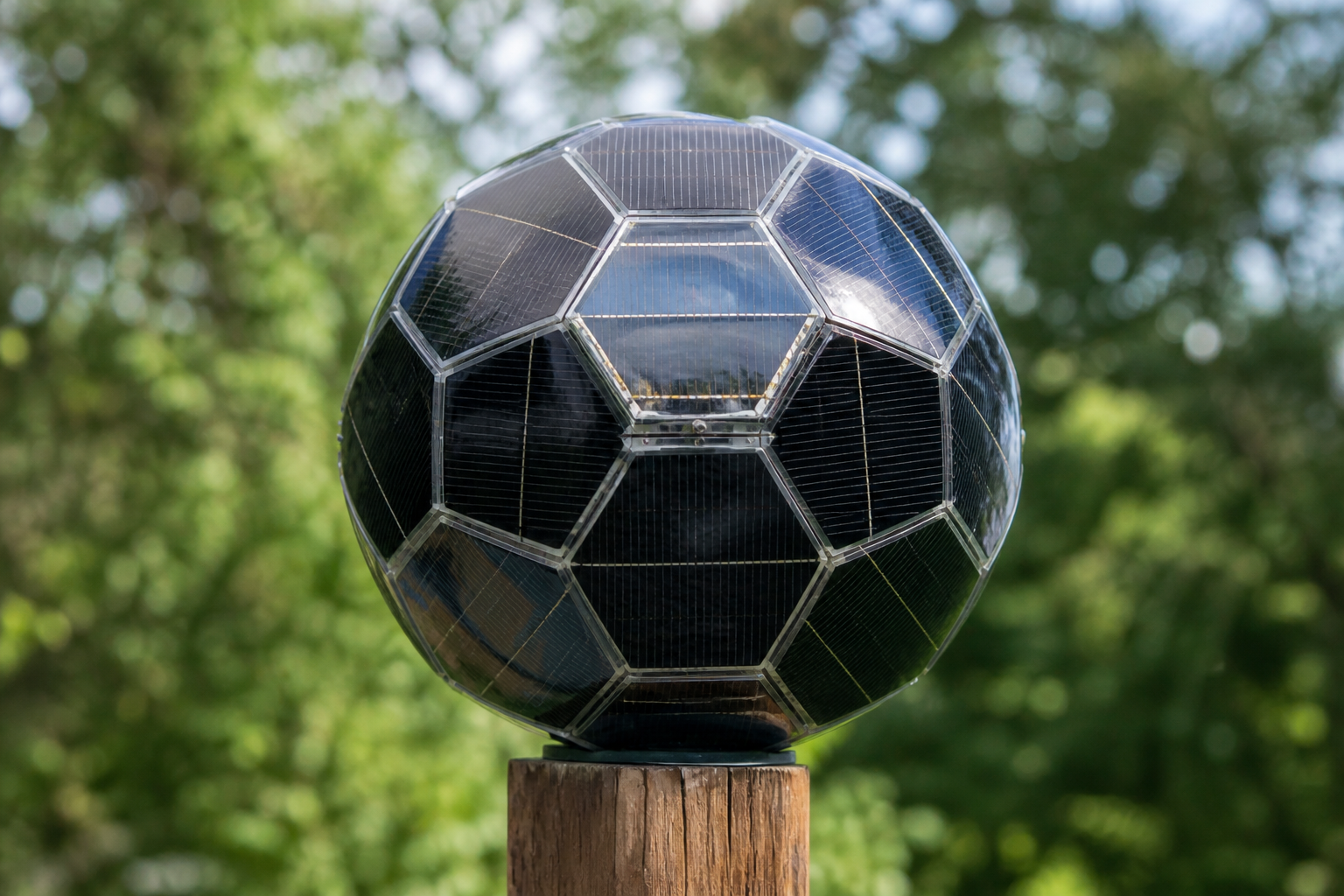
The 3D solar sphere concept arranges photovoltaic or light-concentrating surfaces in a spherical geometry to theoretically harvest sunlight from more angles than a flat panel. It remains an experimental and unverified DIY approach — not an established power solution — but it is a legitimate area of hobbyist exploration for small off-grid loads.
If you have been searching for small off-grid power DIY options beyond the standard flat-panel rooftop setup, you have probably stumbled across the phrase '3D solar sphere' — and you have probably also found more hype than hard data. The concept is simple enough: instead of mounting a flat panel at a fixed angle to catch peak midday sun, a spherical or multi-faceted surface could theoretically collect light from a wider arc throughout the day, including low morning and evening angles.
That idea is not science fiction. Researchers have explored spherical concentrator geometries for years, and the physics of omnidirectional light collection is real. What is not established — and what deserves plain language rather than excited sales copy — is whether a small, hand-built version of this concept can reliably power anything meaningful in a real homestead or prepper household context. The honest answer right now is: maybe, for very small loads, and only if you go in with clear eyes about what you are building and why.
This article walks through what the 3D solar sphere concept actually involves, what the science says, what realistic DIY builders have observed, and what you would actually need to power with a small experimental device. If you are curious about the concept and want a structured starting point, we will also cover one $39 guide that teaches a version of this build — with the same candor about its unverified status that the guide's own publisher applies to it.
What a 3D Solar Sphere Actually Is (And Is Not)
A 3D solar sphere is a light-harvesting device built with photovoltaic cells or concentrating surfaces arranged across a roughly spherical or geodesic form, rather than in a flat plane. The core claim is that this geometry captures diffuse and angled light that a flat panel misses — especially during the low-sun hours of early morning, late afternoon, and overcast conditions.
Flat solar panels are optimized for direct perpendicular irradiance. When the sun drops to a low angle, a fixed flat panel's effective output falls off significantly because the surface area intercepting direct rays shrinks. A curved or multi-faceted surface does not have a single 'dead angle' in the same way — some face of the structure is always closer to perpendicular with the incoming light.
What a 3D solar sphere is NOT is a source of free energy or a device that somehow generates more power than the photons hitting it justify. It cannot break thermodynamic laws, and a small sphere — say, 12 inches in diameter — has a fixed total surface area. Even if every cell on that surface were perfectly efficient, the total wattage output is bounded by the solar irradiance hitting that area. The honest framing is efficiency of collection over time, not a multiplication of energy.
Academic interest in spherical solar concentrators is real. A team at Rawlemon, for example, demonstrated a glass sphere concentrator that focused light onto a small high-efficiency cell. However, those engineered prototypes used precision optical materials and precise cell placement — not something a backyard builder replicates easily. A DIY version is a learning project and an experimental device, not a proven product.
The Physics: Where the Concept Has Legitimate Legs
Solar panels lose output at low sun angles primarily because of the cosine effect — the effective collecting area of a flat surface equals its physical area multiplied by the cosine of the angle between the panel normal and the sun. At 60 degrees off-axis, you lose roughly half your potential output.
A spherical arrangement partially mitigates this because no single face is ever more than 90 degrees from the sun. Across a full day, the integrated energy collection of a well-built spherical surface can exceed that of a fixed flat panel of equivalent total cell area — at least in theory and under idealized modeling conditions. Peer-reviewed work on building-integrated photovoltaics and omnidirectional collectors does support this general principle.
However, there are real engineering catches. Wiring multiple small cells in a spherical arrangement introduces shading losses — when part of the sphere is in shadow, those cells can drag down the whole string if not properly managed with bypass diodes or individual maximum power point tracking. Heat management is also different on a 3D form. And the structural complexity of building a durable, weatherproof sphere with consistent cell-to-cell electrical connections is not trivial.
For a small experimental device — something aimed at trickle-charging a battery, running a few sensors, or powering a low-draw radio — these engineering challenges are manageable at the hobbyist level. For a device meant to power a refrigerator or a well pump, they are not. Understanding that distinction before you start is what separates a productive experiment from a frustrating waste of materials.
- Cosine effect: flat panels lose significant output at sun angles below 30 degrees above horizon
- Spherical geometry ensures some surface is always near-perpendicular to incoming light
- Diffuse light days (overcast) may show smaller gap between flat and spherical performance
- Shading losses from partial shadowing require careful cell wiring with bypass diodes
- Total output is still bounded by the sphere's physical surface area and cell efficiency
- Peer-reviewed work on omnidirectional PV exists but involves precision engineering, not casual DIY
What a Small DIY Build Can Realistically Power
A small hand-built 3D solar device — in the 10- to 14-inch diameter range using standard small photovoltaic cells — is a low-wattage source. Set realistic expectations before you commit time and materials.
Using rough figures: a 12-inch sphere has a surface area of about 452 square inches, or roughly 0.29 square meters. If you covered that entirely in cells running at 15 percent efficiency under 1,000 W/m2 peak irradiance, the theoretical peak output would be around 43 watts. In practice, with hobby-grade cells, wiring losses, shading losses, and the fact that only part of the sphere faces the sun optimally at any moment, a real DIY build might deliver 5 to 15 usable watts under good conditions.
That is not nothing. Five to fifteen watts sustained over a day can trickle-charge a 12V battery, run a small emergency radio or weather station, keep a motion sensor or trail camera topped off, or power low-draw LED lighting in a small outbuilding. In a prepper context, those are genuinely useful applications — especially if the device is placed where a conventional panel cannot easily go, or if you are building it as a learning project alongside a broader power system.
Where it falls short: powering anything with a meaningful motor load, running a chest freezer, charging a laptop at speed, or serving as a primary power source for a household. Anyone selling a small spherical solar device as a whole-home solution is not being straight with you — and you should treat any marketing that implies otherwise with skepticism.
- Emergency battery trickle charging (12V systems)
- Low-draw radio or weather monitoring station
- Motion sensors, trail cameras, or remote sensors
- Small LED lighting in a shed or outbuilding
- Learning platform for understanding solar cell wiring and MPPT basics
- NOT suitable as a primary household power source or for motor loads
DIY Build Basics: What You Actually Need to Start
Building a small 3D solar device from scratch requires a modest but specific set of skills and materials — more than a basic craft project, less than professional electrical work.
On the materials side, you will need small photovoltaic cells (individual cells cut from larger panels or purpose-made small cells work), a frame or form to mount them on (geodesic frameworks made from PVC, aluminum rod, or 3D-printed connectors are common approaches), tabbing wire and flux for cell-to-cell connections, a blocking diode to prevent reverse current, and a charge controller if you are feeding a battery. Total materials cost for a small experimental build typically runs $30 to $80 depending on cell quality and frame materials — separate from any guide or instruction source you use.
The wiring configuration matters more than most beginners expect. Cells wired in series increase voltage; cells in parallel increase current capacity. Most small 12V battery charging applications want a string configuration that produces 17 to 21 volts under load, then regulated by a simple PWM charge controller. Bypass diodes across each cell or small group of cells prevent a shaded section from becoming a dead short that robs the rest of the array.
Weatherproofing is the step most DIY builders underestimate. Cells exposed to rain, humidity, and thermal cycling without encapsulant or a protective cover degrade quickly. Even a simple acrylic over-coating or silicone encapsulant applied to cells before mounting significantly extends device life. If you are building this for long-term use rather than a single demonstration, plan that step in from the beginning.
Tools you will likely need: a soldering iron with a fine tip, rosin flux, a multimeter, wire strippers, and whatever is appropriate for your chosen frame material. None of this requires specialist equipment, but competent soldering is genuinely required — cold solder joints on small cells are the most common failure point in hobbyist PV projects.
Our Recommendation: Solar Innovator
The core problem this article addresses is real: flat-panel solar has limitations for small, flexible, or experimental off-grid applications, and the 3D solar sphere concept offers a genuinely interesting alternative geometry — but finding a structured, step-by-step build path through the noise of vague YouTube videos and incomplete forum posts is harder than it should be.
The DIY gap here is not materials or motivation — it is sequencing and specifics. Most free resources on spherical solar builds either stop at the physics concept, assume electronics knowledge most preppers do not have, or gloss over the wiring and weatherproofing steps where real builds fail. Piecing together a reliable workflow from scattered sources takes hours of cross-referencing, and even then you are left guessing on cell configurations and charge management.
Solar Innovator is a $39 digital guide from the same publisher family as similar DIY energy concept guides in this space. It teaches how to build a small 3D solar-sphere-style device, framed around the 'energy on demand' concept. Critically — and this is worth stating plainly — the publisher's own sales page describes this as unverified experimental technology, which is exactly how you should approach it: as a structured learning project and a small supplemental power experiment, not a proven replacement for conventional solar. If you are drawn to the concept, want a single organized resource rather than hours of forum-diving, and are comfortable working on a small-scale experimental build, Solar Innovator gives you a concrete starting framework for a reasonable entry price. No guarantee information was provided, so factor that into your decision. For the next step, read DIY Off-Grid Power Generation Without Solar or Utility Hook-Up: 5 Real Options Compared.
Our recommendation
Solar Innovator
Check availability →This article contains an affiliate link. If you buy through it, we may earn a commission at no extra cost to you.
Frequently asked questions
Does a 3D solar sphere actually produce more power than a flat solar panel?
Not necessarily more total power — but potentially more consistent power across a full day. A spherical surface collects light from more angles than a fixed flat panel, so it loses less output during low-sun morning and evening hours. The total energy delivered over a day can exceed a fixed flat panel of equivalent cell area under some conditions, but the maximum output is still bounded by the device's physical size and cell efficiency. Any claim that it multiplies energy beyond what the sun delivers is physically impossible.
How much does it cost to build a small DIY solar sphere?
Materials for a small experimental 3D solar sphere typically run $30 to $80, depending on cell quality, frame materials, and whether you already own basic tools like a soldering iron and multimeter. A digital build guide adds to that cost but is separate from materials. This is a hobbyist-scale budget project, not a major investment — but treat it as a learning experiment rather than an immediate power solution.
What can a small homemade solar sphere actually power?
A small hand-built device in the 10- to 14-inch range realistically delivers 5 to 15 watts under good conditions. That is enough to trickle-charge a 12V battery, run a low-draw emergency radio, power trail cameras or remote sensors, or light a small outbuilding with LEDs. It is not sufficient as a primary household power source or for any significant motor or appliance loads.
Is the 3D solar sphere concept scientifically proven?
The underlying physics of omnidirectional light collection is real and has been studied in peer-reviewed research. However, small DIY builds using hobby-grade components have not been independently verified to deliver the efficiency gains the concept suggests in theory. Treat any specific output claims for homemade versions as unverified and experimental until you measure your own build's actual performance.
Do I need electrical experience to build a DIY solar sphere?
You need basic competence with a soldering iron and a working understanding of simple DC circuits — enough to wire cells in series and parallel, install a blocking diode, and connect a charge controller. This is not a beginner project for someone who has never picked up a soldering iron, but it does not require professional electrical training. A structured step-by-step guide significantly reduces the learning curve.
Related guides
Sources
- NREL — Solar Resource Data and Tools (irradiance fundamentals)
- U.S. Department of Energy — Solar Energy Technologies Office: How PV Works
- NREL — Small Solar Electric Systems Guide
General preparedness information, not medical or legal advice. Follow instructions from your local emergency authority during an active event.
Field notes by email
Get the next guide before you need it
One email when a new field guide drops — water, food, power, medicine. No spam, no daily noise, unsubscribe in one click.
Comments on this guide
Questions, corrections and field reports from your own setup are welcome.
No comments yet. Be the first to add a field report.