
Food
How to Get Enough Protein on a Plant-Based Emergency Food Supply (Without Buying Expensive Specialty Products)

By Ephraim Rusk · · 10 min read
This article contains an affiliate link. If you buy through it, we may earn a commission at no extra cost to you.
Quick answer
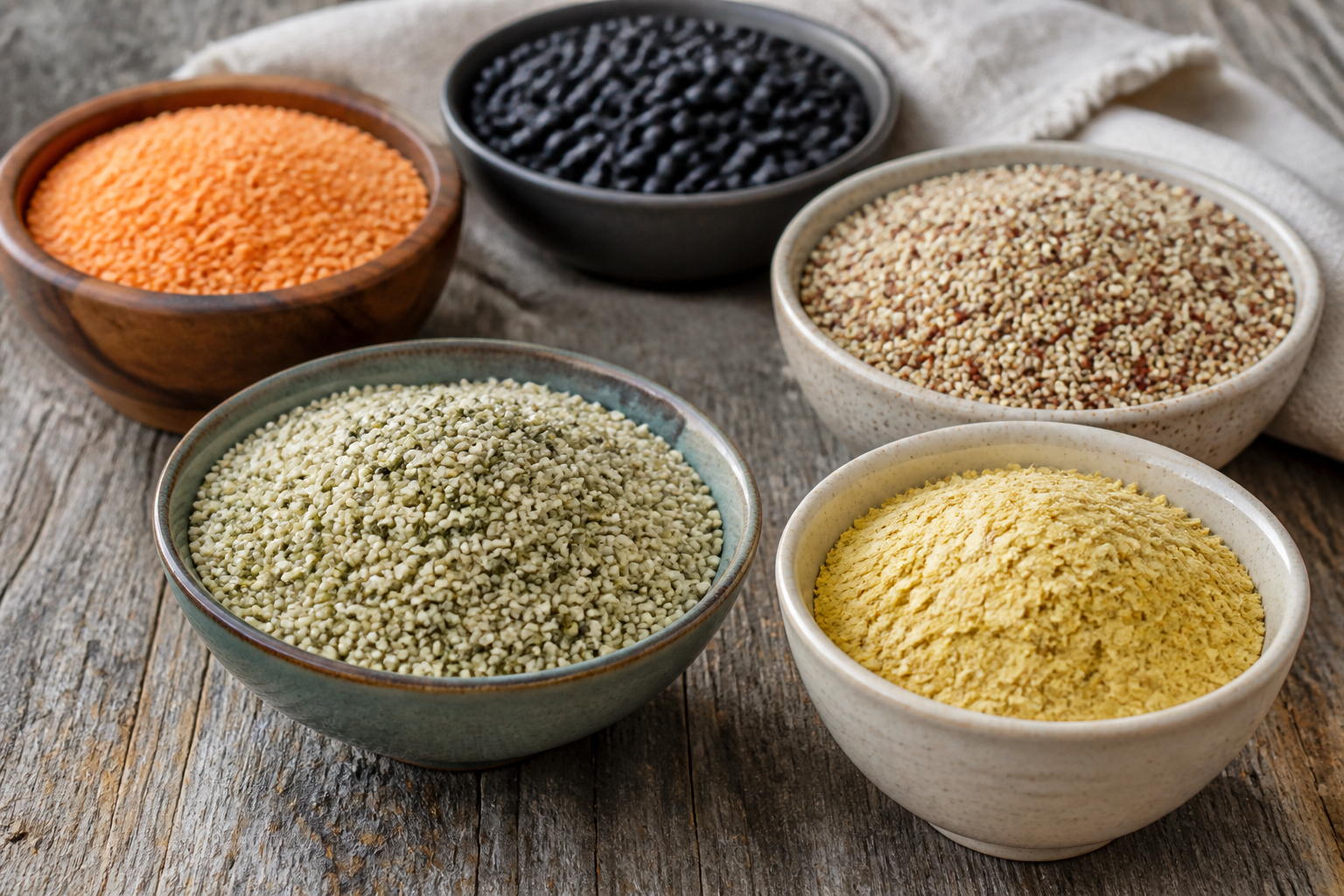
You can meet daily protein needs from a plant-based emergency food supply by combining shelf-stable staples — dried legumes, whole grains, nuts, and seeds — that together provide all essential amino acids. A well-planned 90-day pantry stocked with lentils, black beans, quinoa, and hemp seeds can realistically deliver 50–80 grams of protein per day per adult without specialty products.
High-protein vegan meals from stored food are achievable with the right pantry — but most plant-based preppers never build that pantry correctly in the first place. They load up on rice, oats, and canned vegetables, hit their calorie targets on paper, and call it done. Protein gets an afterthought, or worse, gets delegated entirely to expensive freeze-dried specialty packs that cost three times as much and expire faster than the beans they already own.
Here's the real problem: under normal conditions, a sedentary adult needs roughly 0.8 grams of protein per kilogram of body weight per day, according to the USDA Dietary Reference Intakes. But emergency conditions are rarely sedentary. You're hauling water, chopping wood, running on broken sleep, managing stress. Protein needs during physical exertion and acute stress are meaningfully higher — many sports nutrition researchers put the functional target closer to 1.2–1.6 g/kg for active adults. If your stored food plan was built around the minimum, it's already short.
The good news is that plant-based protein storage is actually well-suited to long-term food resilience — dried legumes and whole grains store for years, cost very little per gram of protein, and need no refrigeration. What's missing for most people isn't the food itself. It's the practical knowledge of how to combine it into real meals that are satisfying, quick to prepare, and protein-adequate day after day.
Why Plant-Based Preppers Consistently Underplan Protein
The most common mistake in plant-based food storage planning is optimizing for calories and shelf life, then assuming protein will take care of itself. It doesn't. A 5-gallon bucket of white rice at 2,000 calories per day provides roughly 35–40 grams of protein — well under half of what an active adult needs. Add a bucket of rolled oats and you're still short. The calories look fine on a spreadsheet; the protein doesn't.
The second mistake is overestimating the protein density of common vegetables. Canned green beans, corn, and peas are nutritious, but they contribute only 1–4 grams of protein per serving. They belong in your storage plan, but they can't carry your protein load. That job belongs to legumes, grains with meaningful protein content, and concentrated sources like nuts and seeds.
A third issue is variety fatigue. Even if someone does stockpile enough lentils and black beans to technically meet protein needs, eating the same three dishes every day for weeks creates real compliance problems — especially with children or anyone managing food sensitivities. If you don't have a rotation of recipes that actually use your stored protein sources, the food doesn't get eaten the way it was planned.
The Best Shelf-Stable Vegan Protein Sources to Store (With Real Numbers)
Dried lentils are the single most practical high-protein storage item for a plant-based household: roughly 18 grams of protein per cooked cup, a shelf life of 4–5 years in sealed containers, and a cost typically under $2 per pound. They also cook faster than most legumes — no overnight soak required — which matters when fuel conservation is part of your situation.
Dried black beans, kidney beans, chickpeas, and navy beans all deliver 14–18 grams of protein per cooked cup and store 5–10 years in sealed, oxygen-free conditions. The trade-off is longer cook times and the need to soak them, which uses more water and fuel. If your water supply is constrained, factor that into your rotation — lentils and split peas are the lower-water options.
Quinoa is worth calling out specifically because it contains all nine essential amino acids in meaningful amounts, making it one of the few plant foods that qualifies as a complete protein. It delivers about 8 grams of protein per cooked cup and stores 2–3 years in airtight containers. At current prices it costs more per pound than most legumes, so treat it as a complement rather than a foundation.
Hemp seeds deserve a place in every plant-based prep pantry. Three tablespoons provide roughly 10 grams of complete protein, they require zero cooking, and they mix into any grain bowl, soup, or porridge without changing the flavor noticeably. Stored in a cool, dark location, shelled hemp seeds stay shelf-stable for 3–6 months at room temperature or over a year refrigerated or frozen. Plan your quantities accordingly.
Nutritional yeast rounds out the list as a protein-dense, B12-fortified option: roughly 8 grams of protein per 2-tablespoon serving, shelf-stable for 1–2 years in a sealed container. It adds a savory, slightly cheesy flavor that makes plain grain-and-bean dishes significantly more palatable — which is not a small thing when palatability is what determines whether your stored food actually gets eaten.
- Dried lentils: ~18g protein per cooked cup, 4–5 year shelf life
- Dried black/kidney/chickpea/navy beans: 14–18g per cooked cup, up to 10 years sealed
- Quinoa: ~8g per cooked cup, complete protein, 2–3 year shelf life
- Hemp seeds (shelled): ~10g per 3 tbsp, no cooking required
- Nutritional yeast: ~8g per 2 tbsp, B12-fortified, 1–2 year shelf life
- Peanut butter (natural, no additives): ~8g per 2 tbsp, 1–2 years unopened
- Sunflower and pumpkin seeds: 5–9g per ounce, store 1 year in sealed containers
How to Build a Protein-Adequate Plant-Based Storage Plan for One Adult
A practical 90-day plant-based protein supply for one adult should target at least 60 grams of protein per day — a conservative number for moderate activity that gives you room to work with. At that target, here's a rough storage quantity per person for a 90-day supply: 20 lbs of dried lentils or split peas, 20 lbs of mixed dried beans, 10 lbs of quinoa or amaranth, 5 lbs of hemp or pumpkin seeds, and 4 lbs of nutritional yeast.
At current bulk pricing, that full 90-day protein foundation costs roughly $80–$120 per person — less than many single freeze-dried meal kits. The cost advantage of whole-food plant protein storage over specialty prepper products is substantial, and the nutritional profile is generally better: more fiber, more micronutrients, less sodium.
The key planning discipline is combining protein sources intentionally at the meal level. While complete proteins are available from individual sources like quinoa and hemp seeds, most legume-and-grain combinations across a day's meals will naturally supply all essential amino acids — your body doesn't require them to be combined in a single meal, just across the day. What matters is that you're hitting your total daily protein number from a variety of sources, not eating one thing exclusively.
Water storage must be planned in parallel. Dried beans and lentils require significant water to cook — roughly 3 cups of water per cup of dry legumes. For a household relying heavily on stored legumes, every gallon of water you store has both hydration and cooking value. That dual-use thinking is how efficient preppers approach storage math.
Practical Meal Patterns That Actually Work Day-to-Day
The real test of any food storage plan is whether you can cook from it under stress, with limited equipment, in a reasonable amount of time. Long, elaborate recipes that work fine in a normal kitchen become obstacles when you're managing a wood stove or single-burner camp setup. Protein-adequate plant-based meals from stored food need to be simple, fast, and repeatable.
A pressure cooker or instant pot dramatically changes the math here. Dried chickpeas that take 90 minutes of stovetop simmering cook in 35–40 minutes under pressure, using significantly less fuel. If pressure cooking isn't available, soaking legumes overnight and using a retained-heat cooker (a well-insulated box around your pot) can cut active fuel use by 50–70% compared to rolling boiling.
Reliable high-protein meal patterns from stored food include: a lentil-and-quinoa pilaf topped with nutritional yeast and pumpkin seeds (roughly 30g protein per serving); a black bean and brown rice bowl with sunflower seeds and peanut sauce (roughly 25g protein); a split pea soup with hemp seeds stirred in at serving (roughly 22g protein per bowl). These aren't gourmet, but they're genuinely filling, nutrient-dense, and buildable from a standard prepper pantry.
Variety is a legitimate preparedness concern, not a luxury preference. Food fatigue — the psychological and behavioral resistance to eating the same meals repeatedly — is documented in disaster response literature and is one of the reasons that nutritionally complete food stores sometimes go underutilized in actual emergencies. Having a rotation of 10–15 distinct recipes you know how to cook from stored ingredients is as important as having the ingredients themselves.
Our Recommendation: Fuel Your Body — 30 High Protein Vegan Recipes
The gap this article keeps returning to is the one between having the right stored ingredients and actually knowing what to cook with them. Stockpiling lentils, quinoa, and hemp seeds is the correct move — but if your recipe knowledge tops out at 'bean soup' and 'rice and beans,' variety fatigue sets in fast, and your carefully built protein supply starts getting skipped in favor of whatever else is on hand.
The honest limitation of the DIY approach here isn't cost or storage — it's having a real working recipe library built specifically around high-protein plant-based meals that don't require fresh ingredients, long prep, or specialized equipment. Building that library from scratch, through trial and error across weeks of cooking, takes time most households don't invest before they actually need it.
Fuel Your Body: 30 High Protein Vegan Recipes is a $10 digital ebook of 30 quick, high-protein plant-based recipes designed for people who need to meet real protein targets without long meal prep — exactly the kind of practical rotation a food-resilient household needs to actually use the stores they've built. At $10 with a 60-day money-back guarantee, the risk is low enough that the decision is mostly about whether you're serious about building out your plant-based cooking repertoire before you need it. If you are, it's worth adding to your prep library. For the next step, read How to Cut Your Grocery Bill 50–90% With a Small Home Garden (High-Yield Crops and Real Math).
Our recommendation
Fuel Your Body: 30 High Protein Vegan Recipes
Check availability →This article contains an affiliate link. If you buy through it, we may earn a commission at no extra cost to you.
Frequently asked questions
How much protein do you actually need from an emergency food supply?
The USDA sets the minimum recommended dietary allowance at 0.8g of protein per kilogram of body weight per day for sedentary adults — roughly 56g for a 154-lb person. Under emergency conditions involving physical labor or high stress, functional needs are likely higher, with many researchers citing 1.2–1.6g/kg as appropriate for active adults. Planning for at least 60–70g per day per adult gives you a reasonable buffer.
Do you need to combine plant proteins at every meal to get complete protein?
No. Current nutritional consensus is that the body pools amino acids over the course of a day, not meal by meal. Eating a varied mix of legumes, grains, seeds, and nuts across your daily meals will supply all essential amino acids without needing to engineer each individual meal as a complete protein. Some sources like quinoa and hemp seeds are complete proteins on their own, which adds useful flexibility.
What is the longest-storing high-protein vegan food?
Dried beans and lentils stored in sealed, oxygen-free containers (Mylar bags with oxygen absorbers inside food-grade buckets) can remain safe and nutritious for 25–30 years according to long-term storage testing, though flavor and cooking quality are best within the first 8–10 years. For practical 3–5 year rotation planning, standard sealed containers work fine without oxygen absorbers.
Is peanut butter a good protein source for emergency food storage?
Peanut butter is a practical storage protein — roughly 7–8 grams per 2-tablespoon serving, calorie-dense, no cooking required, and shelf-stable for 1–2 years unopened (shorter once opened). Natural peanut butter without added oils or stabilizers stores slightly less predictably than commercial brands. It works well as a protein supplement and calorie booster, but its fat content means storage quantities per protein gram are higher than legumes.
Can you realistically hit protein targets on stored food alone during an extended emergency?
Yes, with deliberate planning. A pantry built around dried legumes (lentils, beans, chickpeas), protein-complete grains like quinoa, and concentrated sources like hemp seeds and nutritional yeast can realistically deliver 60–80 grams of protein per adult per day from stored food alone. The key is planning the protein layer explicitly — not assuming it will emerge from a calorie-focused storage plan.
Related guides
Sources
- USDA Dietary Reference Intakes for Protein — National Academies
- NIH: Protein and Amino Acids in Human Nutrition
- FEMA: Food and Water in an Emergency
- USDA FoodData Central: Nutritional composition of legumes and seeds
General preparedness information, not medical or legal advice. Follow instructions from your local emergency authority during an active event.
Field notes by email
Get the next guide before you need it
One email when a new field guide drops — water, food, power, medicine. No spam, no daily noise, unsubscribe in one click.
Comments on this guide
Questions, corrections and field reports from your own setup are welcome.
No comments yet. Be the first to add a field report.