
Medicine
How to Recognize a Heart Attack Without Calling 911: Signs, Steps, and What to Do When Help Is Far Away

By Ephraim Rusk · · 10 min read
This article contains an affiliate link. If you buy through it, we may earn a commission at no extra cost to you.
Quick answer
A heart attack most commonly presents as chest pressure or tightness radiating to the left arm or jaw, often with sweating, nausea, or shortness of breath. If emergency services are unavailable, have the person rest, chew a regular-strength aspirin (325 mg) if they are not allergic and have no bleeding history, and monitor closely — most critical actions happen in the first ten minutes.
How to recognize a heart attack when you cannot call 911 is one of the most important questions any household in a rural or off-grid situation should be able to answer. Response times in rural U.S. counties average over 14 minutes even under normal conditions — and in a grid-down scenario, disaster, or remote homestead situation, that gap grows dramatically.
The problem is not just knowing the word 'chest pain.' Cardiac events are notoriously inconsistent in how they present, particularly in women, diabetics, and older adults. Misreading the signs — or freezing because you are unsure — wastes the minutes that matter most. This article covers what the medical evidence actually says about recognizing a heart attack, what you can do before a paramedic arrives, and how to make a credible decision when professional help is not coming anytime soon.
This is not a replacement for emergency care. If you can call 911, do it immediately. But practical preparedness means knowing what to do in the gap — and that gap is real.
The Classic Heart Attack Symptoms (And Why They Are Not Always Classic)
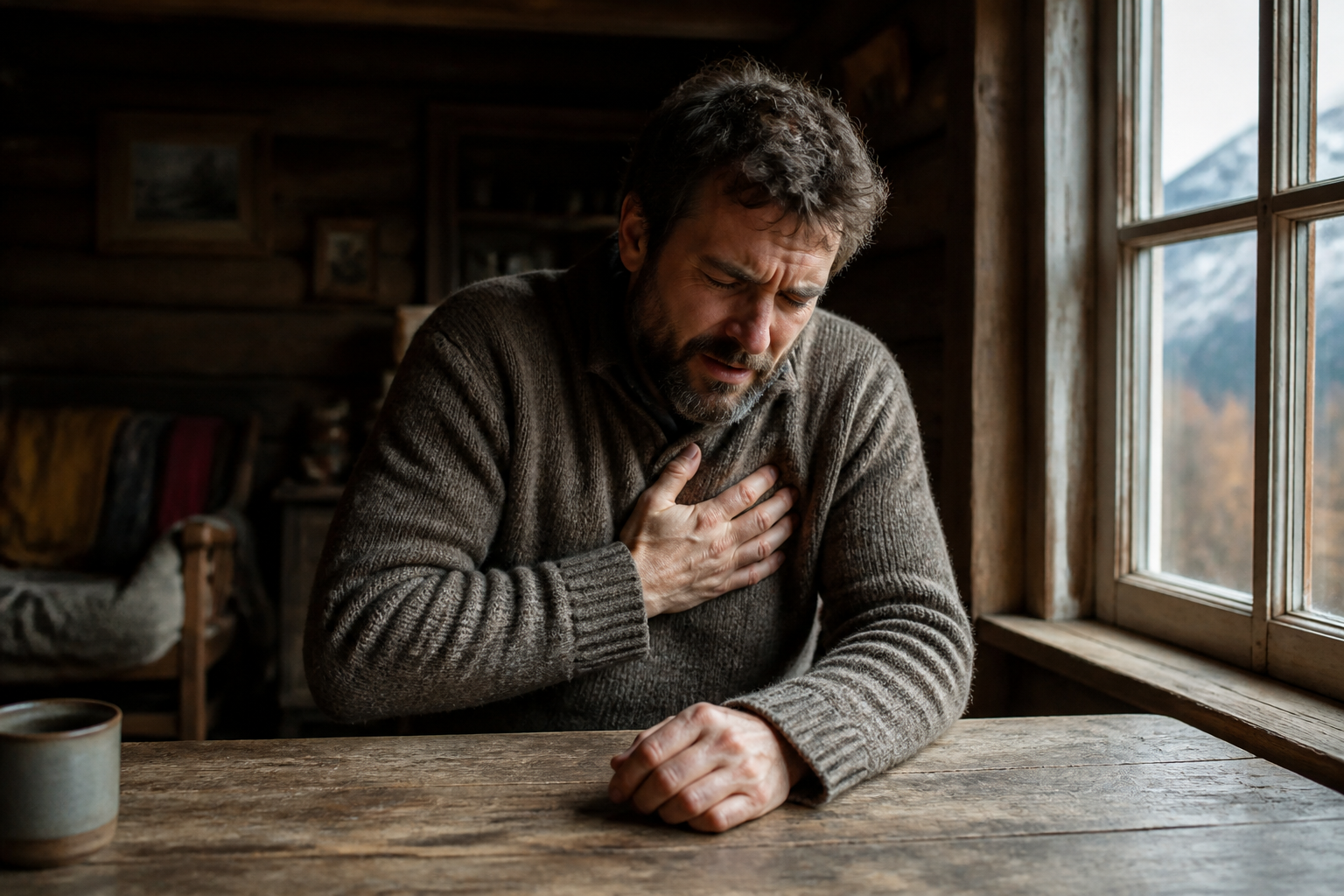
The most recognizable heart attack symptom is chest discomfort — often described not as sharp pain but as pressure, squeezing, fullness, or tightness in the center or left side of the chest. This discomfort typically lasts more than a few minutes or comes and goes. If someone around you describes feeling like there is a weight on their chest, take it seriously.
The discomfort frequently radiates. It can travel into the left arm, the right arm, the jaw, the neck, the back between the shoulder blades, or the upper stomach. Many people dismiss jaw or arm pain as unrelated — do not. If it appears alongside any chest symptoms or other signs below, treat it as cardiac until proven otherwise.
Accompanying symptoms that increase suspicion significantly include sudden shortness of breath (with or without chest discomfort), breaking out in a cold sweat without an obvious cause, nausea or vomiting, and lightheadedness or sudden dizziness. These are not incidental — they reflect the cardiovascular system under severe stress.
One critical point: not every heart attack follows the textbook script. Some people, particularly women, older adults, and people with diabetes, experience what clinicians call 'atypical' presentations — dominant symptoms of jaw pain, back pain, nausea, fatigue, or simply feeling profoundly unwell with no dramatic chest pain at all. The American Heart Association explicitly notes this variation. When something feels wrong and the person is in a known risk group, err toward treating it as cardiac.
Heart Attack vs. Panic Attack vs. Heartburn: How to Tell the Difference
In a stressful situation, panic attacks and severe heartburn can mimic cardiac events closely enough to cause real confusion — and confidently dismissing a cardiac event as 'just anxiety' is a deadly mistake.
Heartburn typically produces a burning sensation that rises from the stomach toward the throat, is often related to a recent meal or lying down, and is usually relieved partially by antacids. Cardiac chest pain is more commonly described as pressure or squeezing rather than burning, is not typically affected by body position in the same way, and is not relieved by antacids.
Panic attacks do produce chest tightness, racing heart, shortness of breath, and sweating — which overlap with heart attack symptoms significantly. The key differentiators: panic attacks tend to peak within ten minutes and then begin to resolve, often come with a strong sense of dread or fear out of proportion to the situation, and may include tingling in the hands and feet from hyperventilation. A heart attack does not typically resolve on its own within ten minutes. If symptoms persist past that window and do not clearly improve, treat it as cardiac.
When in doubt and no professional is available, treat it as a potential heart attack. The cost of being wrong about heartburn or panic is embarrassment. The cost of being wrong about a heart attack is fatal.
The First Ten Minutes: What to Actually Do
If you suspect a heart attack and emergency services are unavailable or far away, your actions in the first ten minutes matter more than anything else you will do.
First, call for emergency help immediately if any communication is possible — a landline, satellite communicator, neighbor, or radio. Do not delay this step to do anything else. Even if response time is long, getting that call in early is essential.
Have the person stop all physical activity and sit or lie down in whatever position feels most comfortable — most patients find a half-upright position easier to breathe in. Loosen any tight clothing around the neck and chest.
Aspirin: if the person is not allergic to aspirin, has no history of recent gastrointestinal bleeding, and is not already on a blood-thinning regimen that contraindicated additional aspirin, have them chew — not swallow whole — one adult aspirin (325 mg) or four low-dose aspirin (81 mg each). Chewing gets it into the bloodstream faster. The evidence for aspirin in acute myocardial infarction is well established, reducing platelet aggregation in the blocked artery. Do not give aspirin if any of the above contraindications apply — when uncertain and you have no medical history to reference, this becomes a judgment call.
Do not give the person anything else to eat or drink. Keep them calm and still. Monitor their breathing and consciousness. If they lose consciousness and stop breathing normally, begin CPR if you are trained. If you have an AED (automated external defibrillator) on the property or nearby, retrieve it — sudden cardiac arrest can follow a heart attack, and an AED is effective for the most common arrest rhythms.
Document the time symptoms started. Emergency physicians use that window to determine treatment eligibility, particularly for clot-busting medications. If you eventually reach emergency services, that timestamp matters.
Risk Factors and Situational Awareness: Who Is Most Likely to Need This Knowledge
Knowing who in your household or community is most at risk helps you stay alert without panicking at every ache. The major established risk factors for coronary artery disease and heart attack include high blood pressure, high LDL cholesterol, smoking, type 2 diabetes, obesity, physical inactivity, a family history of early heart disease, and age — men over 45 and women over 55 carry significantly elevated risk.
In a preparedness context, these risks interact with stress, disrupted medication supplies, irregular diet, and reduced access to routine medical monitoring. Someone who normally manages blood pressure with medication may be significantly more vulnerable if that supply is interrupted for even a few weeks.
Practically: know the medical histories of the people you live and work with. Know whether anyone takes heart medications, blood thinners, or diabetes drugs, and what happens when those are missed. Keep a written record of each person's conditions, medications, dosages, and known allergies — in a printed format, not just on a phone. This is basic household medical preparedness that most families have not done.
Keep an aspirin supply accessible and clearly labeled. Consider a basic first-aid course that includes CPR and AED training — the American Red Cross and American Heart Association both offer community classes. If your property is remote, a personal AED is worth serious consideration for households with high-risk members.
Our Recommendation: The Home Doctor
A cardiac emergency with no help on the way is one of the most terrifying gaps in household preparedness — not because people do not care, but because almost no one has a reliable, practical reference for what to actually do when professional care is out of reach.
The limitation of internet searches and downloaded PDFs is real: in a grid-down situation, your phone is dead or your signal is gone precisely when you need that information most. Free first-aid guides are rarely written with the depth that a true medical emergency demands, and most do not cover the nuanced decision-making — aspirin contraindications, atypical symptom patterns, managing chronic conditions without a physician — that a real off-grid household faces.
The Home Doctor is a 304-page printed reference written by medical professionals specifically for households that may lose access to a doctor. It covers recognizing cardiac events and strokes, wound care, chronic condition management, and natural remedies — the practical clinical knowledge that belongs on a prepared household's shelf, not behind a paywall when the grid is down. It comes with a 60-day money-back guarantee, so there is no risk in evaluating it for your household's needs. If your library has a gap where real medical guidance should be, this is the place to close it. For the next step, read Herbal Remedies for Cold and Flu Symptoms: What Actually Works at Home.
Our recommendation
The Home Doctor
Check availability →This article contains an affiliate link. If you buy through it, we may earn a commission at no extra cost to you.
Frequently asked questions
What is the first thing to do if someone is having a heart attack far from a hospital?
Call for emergency help by any means available, then have the person stop all activity and rest. If they are not allergic to aspirin and have no bleeding history, have them chew one adult aspirin (325 mg). Keep them calm, monitor their breathing, and document when symptoms started.
Can you have a heart attack without chest pain?
Yes. Atypical presentations — jaw pain, back pain, nausea, unusual fatigue, or simply feeling profoundly unwell — are well documented, particularly in women, older adults, and people with diabetes. The American Heart Association explicitly warns that the absence of classic chest pain does not rule out a cardiac event.
How do you tell the difference between a heart attack and a panic attack?
Panic attacks typically peak within ten minutes and then begin to resolve, and often include tingling in the hands and feet. Heart attack symptoms persist and do not improve on their own. If chest discomfort, shortness of breath, or related symptoms last beyond ten minutes without improvement, treat it as a potential cardiac emergency.
Does aspirin help during a heart attack?
Chewing aspirin at the onset of a suspected heart attack is a well-established first response — it slows platelet clumping in the blocked artery. Use a regular adult aspirin (325 mg) or four low-dose (81 mg) tablets chewed, not swallowed whole. Do not give aspirin if the person is allergic, has recent gastrointestinal bleeding, or a physician has advised against it.
What are the signs of a heart attack in women specifically?
Women are more likely than men to experience heart attacks without prominent chest pain. Common female-pattern symptoms include unusual fatigue, jaw or upper back pain, nausea, vomiting, and shortness of breath. These can be mistaken for flu or anxiety. When these symptoms appear together — especially in a woman with risk factors — take them seriously as potentially cardiac.
Related guides
Sources
General preparedness information, not medical or legal advice. Follow instructions from your local emergency authority during an active event.
Field notes by email
Get the next guide before you need it
One email when a new field guide drops — water, food, power, medicine. No spam, no daily noise, unsubscribe in one click.
Comments on this guide
Questions, corrections and field reports from your own setup are welcome.
No comments yet. Be the first to add a field report.