
Power
How to Survive a Long-Term Power Outage Without a Generator: 5 Low-Tech Methods That Actually Work

By Ephraim Rusk · · 10 min read
This article contains an affiliate link. If you buy through it, we may earn a commission at no extra cost to you.
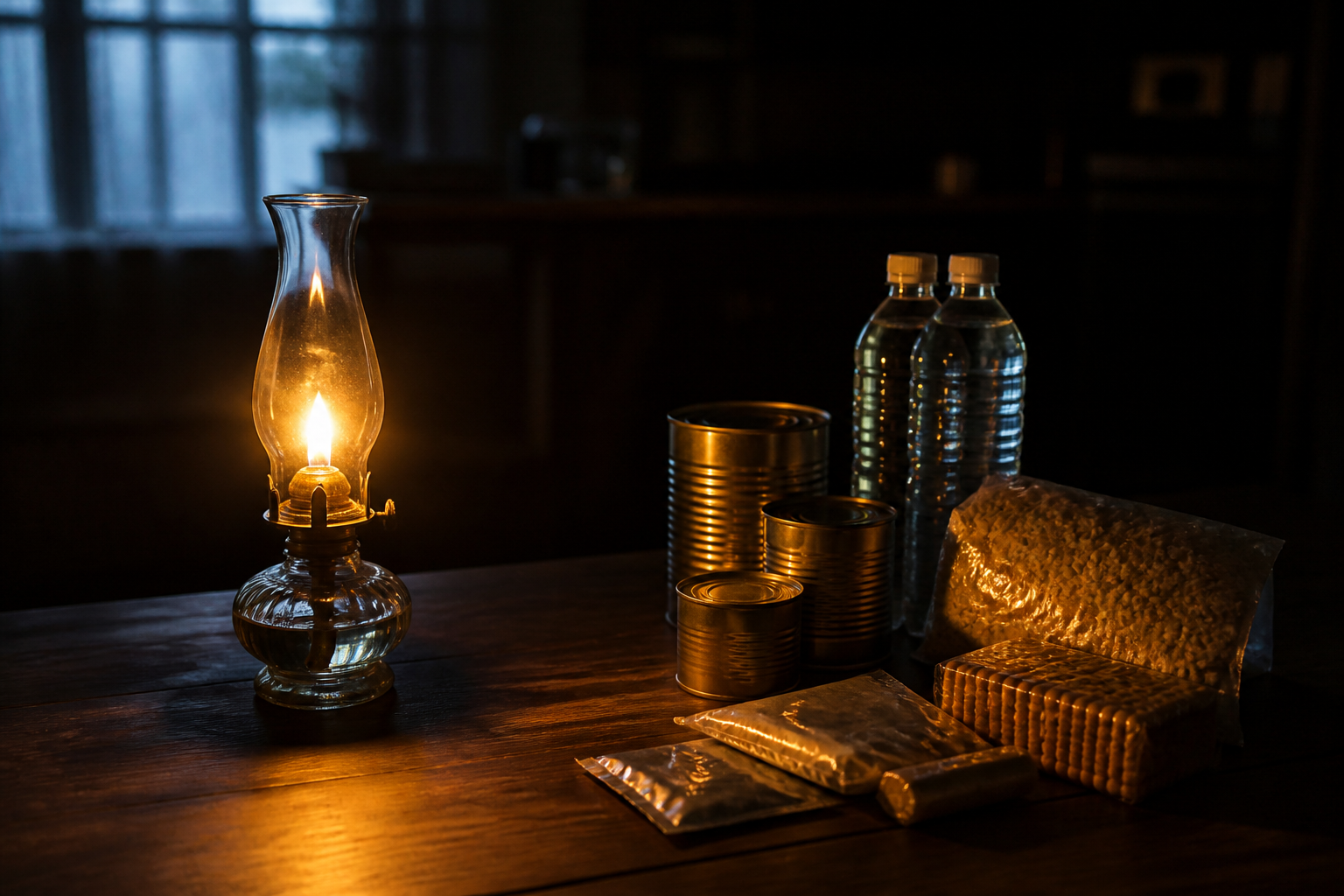
Quick answer
You can survive a long-term power outage without a generator by mastering five low-tech pillars: passive food preservation, non-electric water purification, natural lighting and heat management, manual communication and navigation, and shelter hardening. These methods require no fuel, no batteries, and no maintenance — which is exactly why they outlast generator-dependent approaches.
Surviving a long-term power outage without a generator is entirely possible — and in many respects more reliable than depending on one. Most households that prep for a blackout default immediately to generators, but a generator is a fuel-dependent machine with a hard expiration date on its usefulness. When the gas stations run dry, and they do within 24 to 72 hours of a regional disaster, that expensive piece of equipment becomes dead weight in your garage.
The households that historically ride out extended outages — weeks, not days — tend to share a different approach. They rely on methods that require no fuel, no replacement parts, and no specialized knowledge to maintain. Amish communities, off-grid homesteaders, and wildland fire crews operating in remote areas have all developed overlapping playbooks built around the same principle: simple systems don't break down under pressure the way complex ones do.
This article covers the five specific areas where a no-generator strategy has to be solid — food, water, light and heat, communication, and shelter — and what each one actually looks like in practice. If you are researching blackout preparedness or EMP readiness and wondering whether you can get there without spending thousands on backup power equipment, the honest answer is yes. Here is how.
Why Generators Fail in Long-Term Outages (And What the Data Shows)
Generators are designed for short outages, not extended grid-down scenarios. The average portable generator runs 8 to 12 hours on a full tank of gasoline, which means a one-week outage requires roughly 10 to 15 refills under typical household use. FEMA and the U.S. Department of Energy both document that fuel supply chains collapse within 48 to 72 hours of a major regional disaster — before most extended outages even reach their midpoint.
The 2003 Northeast blackout, the 2011 Southwest outage, and the 2021 Texas grid failure all produced the same pattern: generator fuel was exhausted or inaccessible within the first three days for the majority of households that had one. The households that fared best over the following days were those with passive, fuel-free systems already in place — not those scrambling to find gasoline.
This is not an argument against generators entirely. A generator has real value as a bridge tool for the first 24 to 48 hours of an outage. The problem is treating it as a complete solution. If your blackout plan begins and ends with a generator, you are one fuel shortage away from having no plan at all.
Food Preservation Without Power: Passive Cooling and Dry Storage
Food stays safe longer than most people expect without refrigeration, provided you understand the temperature thresholds and manage your resources deliberately. The USDA's guidance is clear: a full, unopened refrigerator holds safe temperatures for approximately four hours after power loss; a full freezer holds for 24 to 48 hours. After those windows close, your approach shifts to passive preservation.
Root cellaring is the most immediately practical method for most households. A root cellar — or even a corner of a basement, a buried cooler, or a shaded trench — maintains temperatures between 32 and 40 degrees Fahrenheit through soil insulation alone in most North American climates. Produce stored this way keeps for weeks to months. The USDA Extension Service documents consistent success with this method for potatoes, carrots, beets, turnips, apples, and cabbage.
Dry goods — grains, legumes, salt-preserved meats, dried beans, rice — form the backbone of any serious long-term food plan and require no cold storage at all. The practical lesson from off-grid communities is to build your staple food supply around ambient-temperature-stable items first and treat refrigeration as a convenience, not a requirement. If you lose power today, the household with 30 days of dry staples is in a fundamentally different position than the household with a full refrigerator and a generator.
Salt curing, dehydration, and fermentation are three additional preservation methods that require no electricity and have centuries of proven use. Each has a learning curve, but none require specialized equipment beyond containers and basic materials available at any grocery store.
Non-Electric Water Purification: What Actually Works for Weeks, Not Hours
Water purification without electricity is straightforward, but it requires having the right materials on hand before the outage begins. Boiling is the CDC's primary recommended method for making water microbiologically safe — it requires only a heat source, which can be a camp stove, a wood fire, or a rocket stove built from cinder blocks and scrap metal.
Gravity-fed ceramic or carbon block filters — the kind used in off-grid cabins and remote field stations — require no power, no batteries, and no pressure. They work by moving water downward through a filtration medium at a slow, steady rate. Units from established manufacturers have independently tested removal rates for bacteria, protozoa, and many chemical contaminants. The CDC and EPA both recognize gravity filtration as an effective household water treatment method.
Chemical treatment with unscented liquid chlorine bleach (sodium hypochlorite at 6 to 8.25 percent concentration) is the lowest-cost backup method. The EPA's guidance is specific: add 8 drops per gallon for clear water, 16 drops per gallon for cloudy water, mix, and let stand for 30 minutes before use. A single dollar-store bottle of bleach treats hundreds of gallons and has a shelf life of roughly six months to one year.
The critical point for long-term outage planning is redundancy: have at least two purification methods available. If your primary filter clogs or breaks, a secondary chemical method keeps your water supply intact. Off-grid households treat this the same way they treat fire-starting — one method is a single point of failure, two methods are a plan.
Lighting, Heat, and Shelter Management Without Grid Power
Passive thermal management — using your home's physical structure to retain or shed heat — is the single highest-leverage skill in long-term outage survival, and it costs nothing to implement once you understand it. In winter conditions, a grid-down home loses heat at a rate determined by insulation quality, window size, and outside temperature. The practical response is to consolidate: close off unused rooms, hang blankets over doorways to create a smaller heated zone, and use body heat, candles, and a single kerosene or propane heater to maintain livable temperatures in that reduced space.
The CDC's hypothermia guidance notes that indoor temperatures as low as 50 degrees Fahrenheit can cause hypothermia in elderly individuals and young children over extended exposure. This makes thermal management a genuine medical priority, not just a comfort issue. Sleeping in a group, using insulated sleeping bags rated for expected temperatures, and layering clothing are the same techniques used in wilderness survival and translate directly to grid-down home scenarios.
Lighting without electricity follows a straightforward hierarchy: candles, oil lamps, battery-powered LED lanterns, and solar lanterns charged during daylight hours. Candles and oil lamps produce carbon monoxide in enclosed spaces — ventilation is non-negotiable. Battery reserves are finite; solar lanterns represent the best long-term lighting solution for an extended outage because they self-replenish daily with no fuel cost.
Shelter hardening — reinforcing doors, windows, and entry points — becomes relevant in extended outages when civil order degrades. This is a real documented pattern in major disaster events, and it belongs in any honest preparedness discussion. Low-tech approaches include door barricade bars, window security film, and establishing clear sight lines around your perimeter.
Our Recommendation: David's Shield
The real danger in a long-term power outage is not any single problem — it is the simultaneous collapse of food storage, water access, warmth, safety, and basic medical care, all at once, in a household that planned for 72 hours and got two weeks. That is the scenario where improvisation fails and preparation wins.
The gap in most DIY preparedness approaches is not information — it is synthesis. There are hundreds of individual guides on water purification, food storage, and home security, but working through all of them, reconciling conflicting advice, and building a coherent household plan takes more time and specialized knowledge than most families have. Free resources online are fragmented, inconsistent in quality, and frequently push toward expensive gear purchases rather than low-tech fundamentals.
David's Shield is a $67 faith-based survival guide built explicitly around the low-tech, Amish-inspired methods this article describes — off-grid home protection, food storage, basic medical care, shelter hardening, and water purification, all favoring simple, no-gadget approaches over expensive equipment. It is written for households that want a single, coherent blackout and EMP-readiness plan without needing an engineering background or a large budget. It comes with a 60-day money-back guarantee, so if it does not deliver what your household needs, you are not out the cost. If you are ready to move from scattered notes to a real plan, David's Shield is a practical starting point worth considering.
Our recommendation
David's Shield
Check availability →This article contains an affiliate link. If you buy through it, we may earn a commission at no extra cost to you.
Frequently asked questions
How long can a house stay warm during a winter power outage without a heater?
It depends on your home's insulation, outside temperature, and how many rooms you are trying to heat. A well-insulated modern home can retain livable temperatures for 8 to 12 hours in moderate cold. Consolidating to one small room with blankets over doorways and using body heat significantly extends that window. In severe cold below 20 degrees Fahrenheit, supplemental heat from a kerosene heater, propane heater, or wood stove becomes a safety necessity within 24 hours.
What food lasts the longest without refrigeration during a power outage?
Hard grains (wheat, rice, corn), dried legumes (beans, lentils), salt-cured meats, honey, white sugar, and commercially canned goods all have shelf lives measured in years at room temperature. These should form the core of any serious long-term outage food plan. Root vegetables stored in a cool, dark, humid environment keep for weeks to months without refrigeration.
Is boiling always enough to make water safe during a power outage?
Boiling kills bacteria, viruses, and protozoa effectively — the CDC confirms one full minute of rolling boil (three minutes above 6,500 feet elevation) is sufficient for microbiological safety. However, boiling does not remove chemical contaminants, heavy metals, or sediment. If your water source may have chemical contamination — for example, floodwater near agricultural or industrial areas — you need a gravity filter or activated carbon treatment in addition to boiling.
Can an EMP actually knock out home appliances, and how do you prepare for it?
A high-altitude electromagnetic pulse (HEMP) event has the theoretical potential to damage unprotected electronics, though the exact scope of civilian appliance damage from a real-world EMP is debated among experts and has not been tested at scale in modern infrastructure. Preparation that focuses on non-electric, low-tech methods — manual food preservation, gravity water filtration, non-electronic communication — is effective regardless of the cause of a power outage, making it a practical hedge even if the precise EMP risk is uncertain.
How do off-grid households handle medical care during extended power outages?
Off-grid and remote households typically maintain a substantial first-aid supply, written reference materials (books, printed guides), and skills including wound care, splinting, and managing common illnesses without prescription medications. The focus is on preventing conditions that require advanced medical intervention: proper sanitation, food safety, thermal management to prevent hypothermia or heat illness, and safe handling of tools and fuel sources. Printed medical references are especially important because digital devices may be unavailable.
Related guides
Sources
- FEMA: Food and Water in an Emergency
- CDC: Making Water Safe in an Emergency
- EPA: Emergency Disinfection of Drinking Water
- USDA: Keeping Food Safe During an Emergency
General preparedness information, not medical or legal advice. Follow instructions from your local emergency authority during an active event.
Field notes by email
Get the next guide before you need it
One email when a new field guide drops — water, food, power, medicine. No spam, no daily noise, unsubscribe in one click.
Comments on this guide
Questions, corrections and field reports from your own setup are welcome.
No comments yet. Be the first to add a field report.