
Medicine
Trauma Kit Essentials: What Every Kit Needs Before the Ambulance Arrives

By Ephraim Rusk · · 10 min read
This article contains an affiliate link. If you buy through it, we may earn a commission at no extra cost to you.
Quick answer
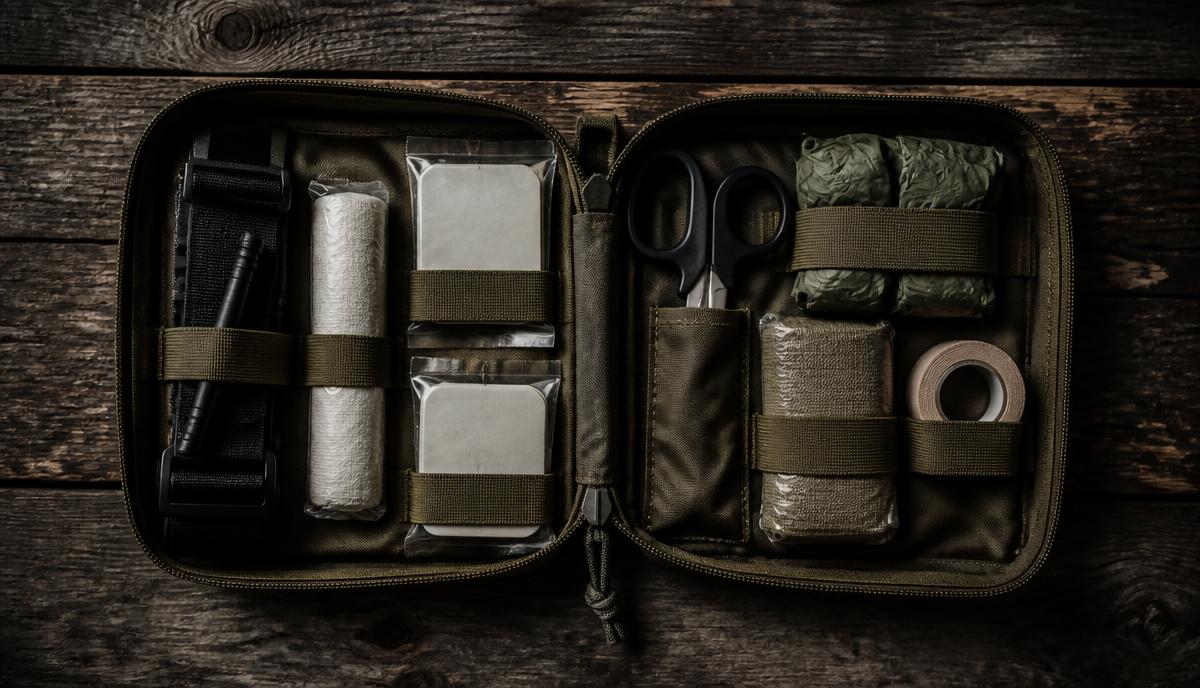
A real trauma kit has five essentials: a windlass tourniquet, pressure dressing, hemostatic or plain gauze, chest seals, and nitrile gloves. Everything else is secondary — these five items treat the injuries that kill fastest: massive bleeding and chest wounds.
Fifteen seasons on wildland fire crews and volunteer search-and-rescue taught me one uncomfortable fact about medical emergencies: the injury that kills someone is usually over before the ambulance is even dispatched. Bleeding from a major artery can be fatal in three to five minutes. Average EMS response in rural America is well over ten.
That gap — the minutes between the injury and professional help — is exactly what a trauma kit exists for. Not comfort, not band-aids, not tweezers. A trauma kit is a small, focused set of tools for stopping the two things that kill fastest: massive bleeding and penetrating chest wounds.
I have built kits for fire line, for the truck, for the homestead, and for families with no medical background at all. The list below is what goes in every one of them, and just as importantly, what I leave out.
Trauma kit vs. first-aid kit: know the difference
A first-aid kit treats problems that ruin your day. A trauma kit treats problems that end your life. The distinction matters because most store-bought 'emergency kits' are 90 percent first-aid supplies — adhesive bandages, antiseptic wipes, burn cream — with nothing inside that can stop a severed artery.
You need both. The first-aid kit handles cuts, blisters, splinters, headaches and minor burns. The trauma kit sits next to it, smaller and far more serious, waiting for the day someone hits an artery with a chainsaw, takes a fall onto rebar, or catches a piece of shattered glass in the wrong place. Keep them separate so nobody digs through forty adhesive strips looking for a tourniquet.
The five trauma kit essentials
If your kit has nothing else, it must have these five items. Together they treat the overwhelming majority of preventable trauma deaths, and every one of them can be used correctly by a trained layperson.
First, a windlass tourniquet — a genuine Committee on Tactical Combat Casualty Care recommended model such as the CAT or SOFTT-W. Cheap imitation tourniquets with stiff windlass rods snap under load; buy the real thing and expect to pay accordingly.
Second, a pressure dressing, often called an Israeli bandage or emergency trauma dressing. It combines an absorbent pad with an elastic wrap and a pressure bar, and it handles the bleeding wounds a tourniquet cannot reach: scalp, neck, groin, armpit.
Third, gauze — hemostatic gauze such as QuikClot or Celox if your budget allows, plain compressed or rolled gauze if it does not. Deep wounds get packed, tightly, until the cavity is full and pressure can be held on top of it. Plain gauze packed well beats expensive gauze packed timidly.
Fourth, a vented chest seal for penetrating wounds between the neck and the navel. An open chest wound collapses the lung; the seal lets air escape without letting it back in. Buy the twin pack — entry and exit wounds travel together.
Fifth, nitrile gloves, at least two pairs. Gloves protect you from bloodborne pathogens and let you work without hesitation. Hesitation kills more patients than technique does.
- Windlass tourniquet (CAT or SOFTT-W, genuine)
- Pressure dressing (Israeli-style emergency bandage)
- Hemostatic gauze, or compressed/rolled gauze as a budget option
- Vented chest seals, twin pack
- Nitrile gloves, two or more pairs
What to add once the essentials are covered
After the core five, a few items earn their place. Trauma shears cut clothing and seatbelts fast — you cannot treat what you cannot see. A compact rescue blanket prevents shock from turning a survivable injury into a cold-weather death. A permanent marker writes the tourniquet application time on the patient's forehead, because under stress you will not remember it.
Medical tape, a spare pair of gloves, and a small flashlight round out a realistic kit. Some people add a nasopharyngeal airway; unless you have been trained to place one, it adds bulk without adding safety. Build the kit around the skills you actually have, then go get more skills.
What I deliberately leave out
A trauma kit is not a field hospital. I leave out sutures and staplers — closing a wound in the field traps infection inside it, and wound closure is a professional decision, not a bystander task. I leave out tourniquet 'systems' with built-in belts and buckles that complicate application under stress. And I leave out anything whose use I cannot explain in one sentence to the person most likely to grab the kit.
Simplicity is a feature. In a real emergency your hands shake, your fine motor skills degrade, and the kit gets used by whoever is standing closest — often a family member with no training at all. Five tools they can recognize beat fifteen they cannot.
Training matters more than gear
Every organization that studies preventable trauma death says the same thing: a trained bystander with a basic kit saves more lives than an untrained one with a premium kit. The CDC's Stop the Bleed program exists precisely because bleeding control is a skill, and skills fade without practice.
Take a Stop the Bleed or wilderness first-aid course, then practice on your own kit quarterly. Pull the tourniquet out, apply it to your own leg one-handed, time yourself. Repack the kit so the tourniquet and pressure dressing come out first, every time, in the dark. The kit is the ammunition; training is the weapon.
Our Recommendation: The Home Doctor
A trauma kit handles the first minutes. But the scenarios that concern prepared families most are the ones where the ambulance is not coming at all — a wildfire that closes the roads, a storm that drops the phone lines, a supply chain failure that empties the pharmacy shelf. Stopping the bleed is step one; knowing what to do for the next three days is the rest of the problem.
That gap is where most households stall. Real medical training takes years, and most home medical books are either padded with folklore or written for professionals. What a family needs is practical, physician-written guidance for managing injuries, infections and chronic conditions when professional care is unavailable — the same standard I apply to my own homestead bookshelf.
The Home Doctor is exactly that: a practical household medicine guide written for situations where help is not on the way, covering wound care, infection, pain management and medication stockpiling in plain language. It carries a 60-day money-back guarantee, so you can judge it against your own shelf before committing. If your trauma kit is the tool for the first five minutes, this is the manual for everything after — add it to the same shelf and read it before you need it. For the next step, read Natural Remedies for Upset Stomach Without Medication: What Actually Works.
Our recommendation
The Home Doctor
Check availability →This article contains an affiliate link. If you buy through it, we may earn a commission at no extra cost to you.
Frequently asked questions
What are the essential items in a trauma kit?
The five essentials are a windlass tourniquet, a pressure dressing, hemostatic or compressed gauze for wound packing, a vented chest seal, and nitrile gloves. These treat the injuries that kill fastest: massive limb bleeding, junctional bleeding, and penetrating chest wounds.
What is the difference between a trauma kit and a first-aid kit?
A first-aid kit treats minor, non-life-threatening problems like small cuts, burns and blisters. A trauma kit is a small, focused set of tools — tourniquet, pressure dressing, gauze, chest seals — designed to keep someone alive through a life-threatening injury until professional help arrives.
Where should I keep my trauma kit?
Keep one where injuries actually happen: the workshop, the kitchen, the truck, and near chainsaws or range equipment. It should be reachable in under a minute, clearly marked, and known to every member of the household — including children old enough to hand it to you.
How long does it take for someone to bleed out?
Uncontrolled bleeding from a major artery can be fatal in three to five minutes — well inside typical emergency response times. That is why bystander bleeding control, taught by programs like Stop the Bleed, is considered one of the highest-value skills a civilian can learn.
Do I need training to use a trauma kit?
Yes — training matters more than the gear. A free or low-cost Stop the Bleed or wilderness first-aid course teaches tourniquet application, wound packing and chest seal use. A trained bystander with a basic kit saves more lives than an untrained one with an expensive kit.
Related guides
Sources
General preparedness information, not medical or legal advice. Follow instructions from your local emergency authority during an active event.
Field notes by email
Get the next guide before you need it
One email when a new field guide drops — water, food, power, medicine. No spam, no daily noise, unsubscribe in one click.
Comments on this guide
Questions, corrections and field reports from your own setup are welcome.
No comments yet. Be the first to add a field report.