
Skills
Survival Kit List: The Complete Checklist for the First 72 Hours

By Ephraim Rusk · · 11 min read
This article contains an affiliate link. If you buy through it, we may earn a commission at no extra cost to you.
Quick answer
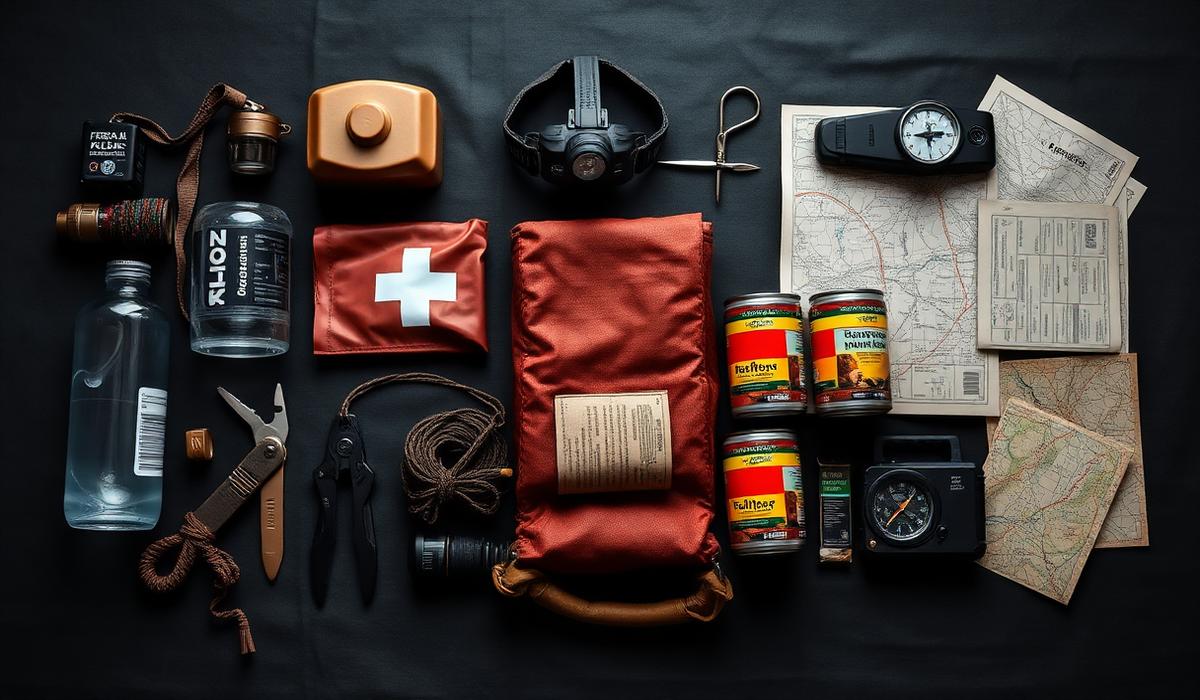
A working survival kit covers seven pillars: one gallon of water per person per day, three days of no-cook food, light and backup power, a real first-aid kit, core tools, warmth and shelter, and a hand-crank NOAA radio — packed so one person can carry it and everyone in the household knows where it is.
Most survival kit lists fail in one of two ways: they are copied from a pre-2004 government pamphlet, or they are a 90-item fantasy nobody ever finishes packing. The result is the same — when something actually happens, the household has a torch, some batteries of unknown age, and a bag nobody can carry.
This checklist is built around the first 72 hours, the window FEMA and the Red Cross consistently identify as the period when you are most likely on your own. It is organised by the same seven pillars we use across every guide on this site, so each section links to the deeper guide for that pillar when you are ready to go further.
Pillar 1 — Water
Water is the first thing that runs out and the hardest thing to improvise. Ready.gov's baseline is one gallon per person per day, half for drinking and half for sanitation, for a minimum of three days in anything you might carry. For a two-person household that is six gallons in the kit, plus whatever you store at home.
Storage alone is not a plan. A three-day supply becomes a one-day supply the moment you share it, so the kit also needs a way to make more water safe. A filter rated to one micron absolute handles bacteria and protozoa; chemical treatment tablets handle the rest as a backup that weighs almost nothing.
- 3 gallons of water per person (1 gallon/day × 3 days)
- Water filter rated to 1 micron absolute or better
- Purification tablets or unscented bleach with an eyedropper
- Collapsible 5-litre container for collecting and treating in bulk
Pillar 2 — Food
Kit food has one job: calories you can eat cold, tired and stressed, with no cooking and no water to prepare. Aim for roughly 2,000 kcal per person per day. Three days of no-cook food for two people is about 12,000 kcal, which fits in one small dry bag.
Rotate kit food every six months. The easiest method is to eat the kit on a camping trip twice a year and restock the next day — this also teaches you what your household will actually eat when the good options are gone.
- Canned fish, chicken or beans with pull-tab lids
- Peanut butter or other dense nut butter
- Energy or protein bars — check dates, heat degrades them fast
- Crackers, dried fruit, nuts and hard candy for morale
- Manual can opener (non-negotiable if any can lacks a pull tab)
Pillar 3 — Power and light
Light is a safety tool, not a comfort: most household injuries during blackouts come from falls and improvised flames. Every person gets a headlamp so both hands stay free, and the kit gets one lantern for a room. Standardise on one battery size so spares work in everything.
A small power bank keeps a phone alive for days if you ration it — aeroplane mode, low brightness, short checks. Phones are your map, your contacts and your news source until they die, so treat their battery as a supply item, not an afterthought.
- One headlamp per person, plus spare batteries
- One LED lantern for the room you shelter in
- 10,000+ mAh power bank, charged and re-checked quarterly
- Battery or hand-crank NOAA weather radio with alert function
Pillar 4 — First aid and hygiene
In the first 72 hours you are your own ambulance. A pre-made kit is a start, not a finish: add the items pre-made kits consistently skimp on — proper trauma dressing, a tourniquet you have actually practised with, and a week of every prescription medication each person depends on.
Hygiene is what keeps a bad week from becoming a medical event. The Red Cross checklist is blunt about it: hand sanitiser, moist towelettes, bin bags and ties for sanitation, and a way to manage toilet needs if the water stops.
- First-aid kit with trauma dressing, tourniquet and nitrile gloves
- 7-day supply of every prescription medication, rotated before expiry
- Hand sanitiser, soap and moist towelettes
- Bin bags, ties and toilet paper for improvised sanitation
- N95 masks — smoke and dust are common in every disaster class
Pillar 5 — Tools and documents
The tool list is short because weight is real. A multi-tool, a fixed-blade or strong folding knife, 30 metres of paracord, duct tape wrapped around a card, and a ferro rod cover the overwhelming majority of improvised repairs and fire-starting.
Documents are the section everyone skips and everyone regrets. In an evacuation you may need to prove identity, residency, insurance and prescriptions to people with no reason to trust you. Copies in a waterproof bag weigh a few grams.
- Multi-tool plus a sturdy knife
- Paracord (30 m) and duct tape
- Ferro rod or stormproof lighter — two ways to make fire
- Copies of ID, insurance, prescriptions and emergency contacts in a waterproof bag
- Cash in small bills — card networks fail before almost anything else
- Wrench or pliers sized for your gas and water shut-offs
Pillar 6 — Shelter and warmth
Shelter failure kills faster than hunger in almost every climate. The kit does not need a tent; it needs the ability to keep each person dry and warm for a night in a car, a shelter or a room with broken windows. Emergency blankets are nearly free and work — carry two per person because they tear.
Add one full change of warm clothing per person, stored in the bag rather than assumed. Cotton kills in the cold: wool or synthetic layers, warm socks, a hat and gloves.
- Two emergency (mylar) blankets per person
- One change of warm synthetic or wool clothing per person
- Hat, gloves and warm socks regardless of season
- 50-litre heavy-duty bags — liner, poncho, shelter material
Pillar 7 — Communications and information
When networks congest, texts get through where calls fail. Write a paper contact card for every person: one out-of-area contact everyone reports to, two meeting points (one near home, one out of the neighbourhood), and the numbers nobody memorises any more.
The hand-crank NOAA radio from the power section doubles as your information lifeline. Add paper maps of your county and state — when you need to reroute around a closed highway, a phone with no signal is a torch.
- Paper contact card per person: out-of-area contact and two meeting points
- Hand-crank NOAA weather radio (also in the power section — one item, two jobs)
- Paper road maps of your county and state
- Whistle — three blasts is the universal distress signal
Pack it, stage it, maintain it
Everything above fits in one 40–50 litre pack per adult, and it should: if you cannot carry it, it is a pantry, not a kit. Stage kits where you actually leave the house — by the main door or in the car boot — not in the basement behind the Christmas decorations.
Set two calendar reminders a year. On each one: rotate food and medication, charge the power bank, test every light, and re-check the fit of the clothing as children grow. Ten minutes, twice a year, is the entire maintenance burden of being ready. For the next step, read Home Food Preservation Without Electricity: 6 Methods That Actually Work.
- One 40–50 L pack per adult, kept by the exit or in the car
- A printed copy of this list inside the bag
- Six-monthly review: food, medication, batteries, clothing
- One household walkthrough so everyone knows where the kits live
Our recommendation
Survival Manual
Check availability →This article contains an affiliate link. If you buy through it, we may earn a commission at no extra cost to you.
Frequently asked questions
What should be in a basic survival kit list?
Water (one gallon per person per day for three days), no-cook food, a headlamp and lantern with spare batteries, a first-aid kit with a tourniquet and a week of prescription medication, a multi-tool and fire-starting gear, emergency blankets and warm clothing, a hand-crank NOAA radio, paper contact cards, cash and copies of key documents.
How much water should a survival kit have?
FEMA and Ready.gov recommend one gallon per person per day, split between drinking and basic sanitation. For a portable 72-hour kit that means three gallons per person, plus a filter or purification tablets to treat additional water when the stored supply runs out.
What is the difference between a survival kit and a bug-out bag?
A survival kit is the general 72-hour supply for your household — it may live at home and support sheltering in place. A bug-out bag is the portable version of the same kit, packed so you can grab it and leave within minutes. In practice you pack one bag per adult that serves both roles, staged near an exit.
How often should I update my survival kit?
Review it every six months. Rotate food and batteries, check medication expiry dates, charge the power bank, test lights, and update clothing sizes. Many households pair the review with the daylight-saving clock change so it never gets forgotten.
Related guides
Sources
- Ready.gov — Build a Kit
- American Red Cross — Survival Kit Supplies
- CDC — Emergency Preparedness and Response
General preparedness information, not medical or legal advice. Follow instructions from your local emergency authority during an active event.
Field notes by email
Get the next guide before you need it
One email when a new field guide drops — water, food, power, medicine. No spam, no daily noise, unsubscribe in one click.
Comments on this guide
Questions, corrections and field reports from your own setup are welcome.
No comments yet. Be the first to add a field report.